

Ingredients
- 4.4 lb whole duck
- 2 apple(s)
- 2 tablespoons olive oiloptional
- to taste salt
- to taste fresh cracked pepper
What makes this Roast Duck recipe truly special is its combination of simplicity, precision, and the rich, comforting flavors that develop during the roasting process. This recipe doesn’t rely on elaborate marinades or dozens of ingredients, yet the results feel refined, flavorful, and restaurant-worthy. The natural richness of the duck, enhanced by just salt, pepper, and a touch of olive oil, is beautifully complemented by the sweetness and aroma of apples roasted inside the cavity.
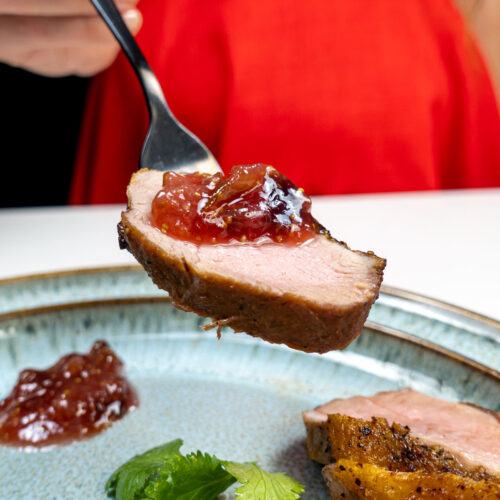
As the duck slowly cooks, the fat renders, the meat becomes tender, and the skin turns golden and crisp, creating a balance of textures and flavors that’s both satisfying and elegant. Each bite gives juicy, flavorful meat with a hint of fruity sweetness, making this a dish that’s as impressive to serve as it is delicious to eat.
Recipe Videos
Check out a quick recipe teaser:

Watch the full cooking process:

💡 Hit play. Unmute for sound.
Recipe steps
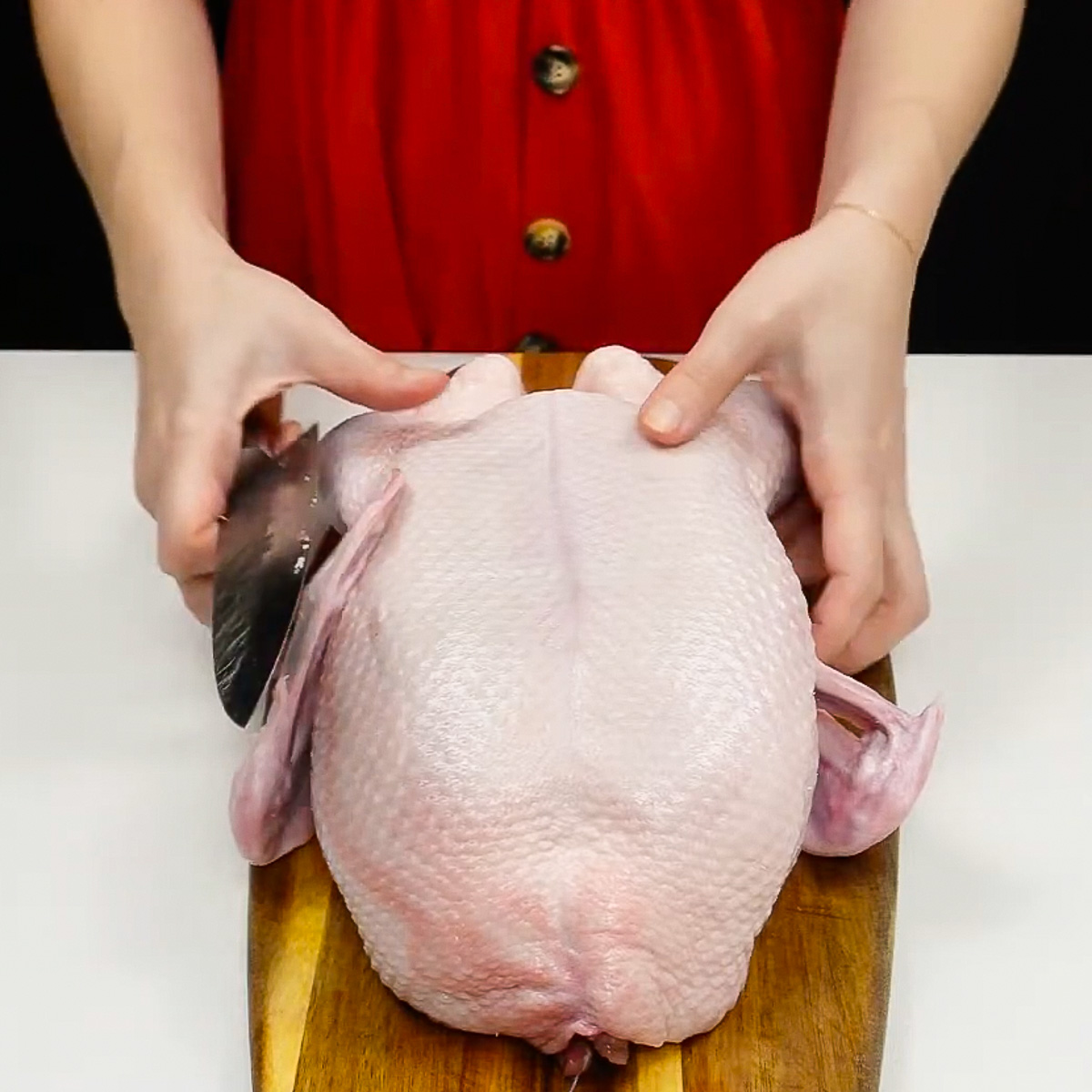
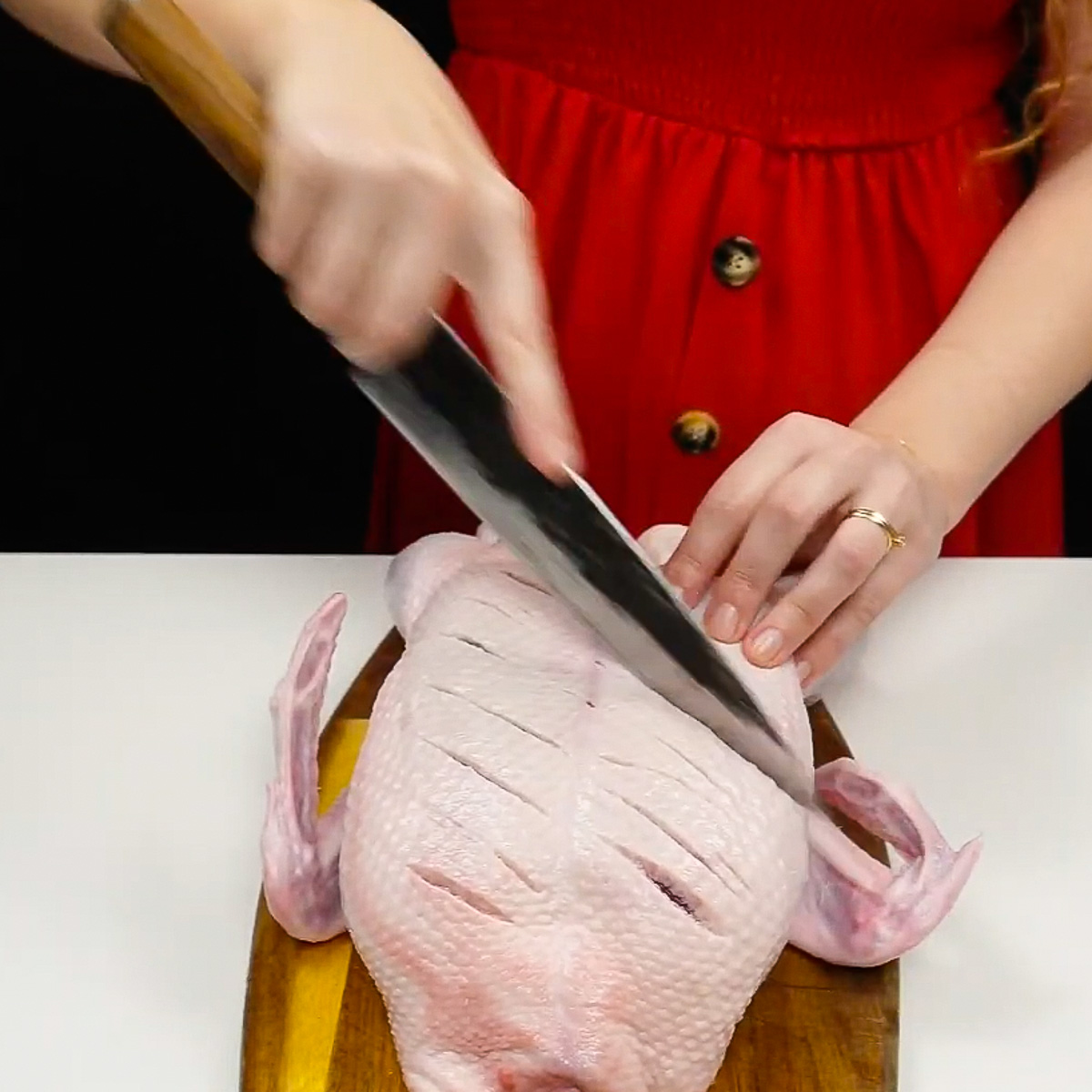
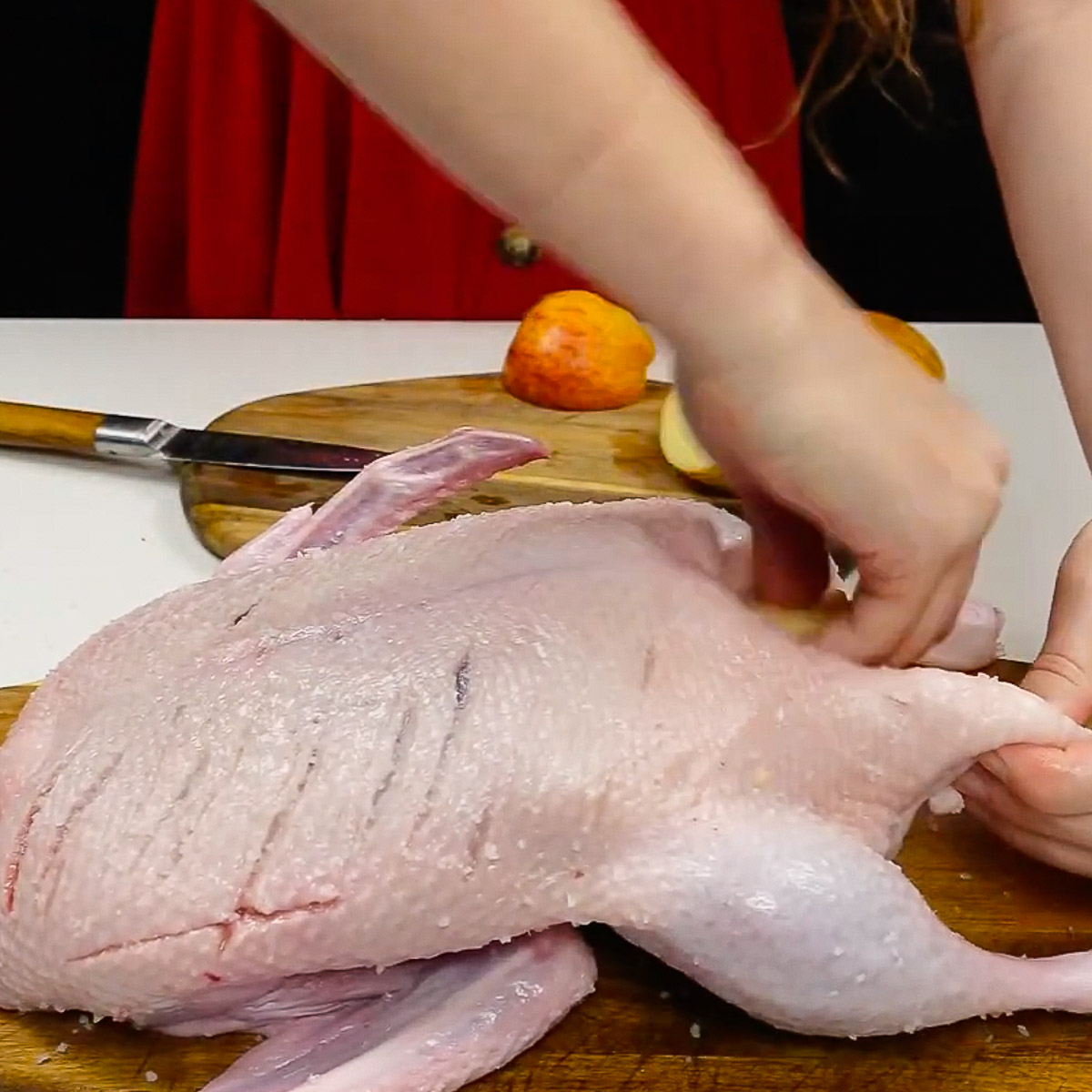
Step 1. Preheat the oven and prepare the duck 30 minutesPreheat the oven to 350°F (180°C). Remove any giblets from the cavity. Pat the duck dry with paper towels. Let it sit at room temperature for 20–30 minutes. Using a sharp knife or skewer, gently prick the skin all over, especially on the fattier areas like the breast and thighs. Avoid piercing the meat. |
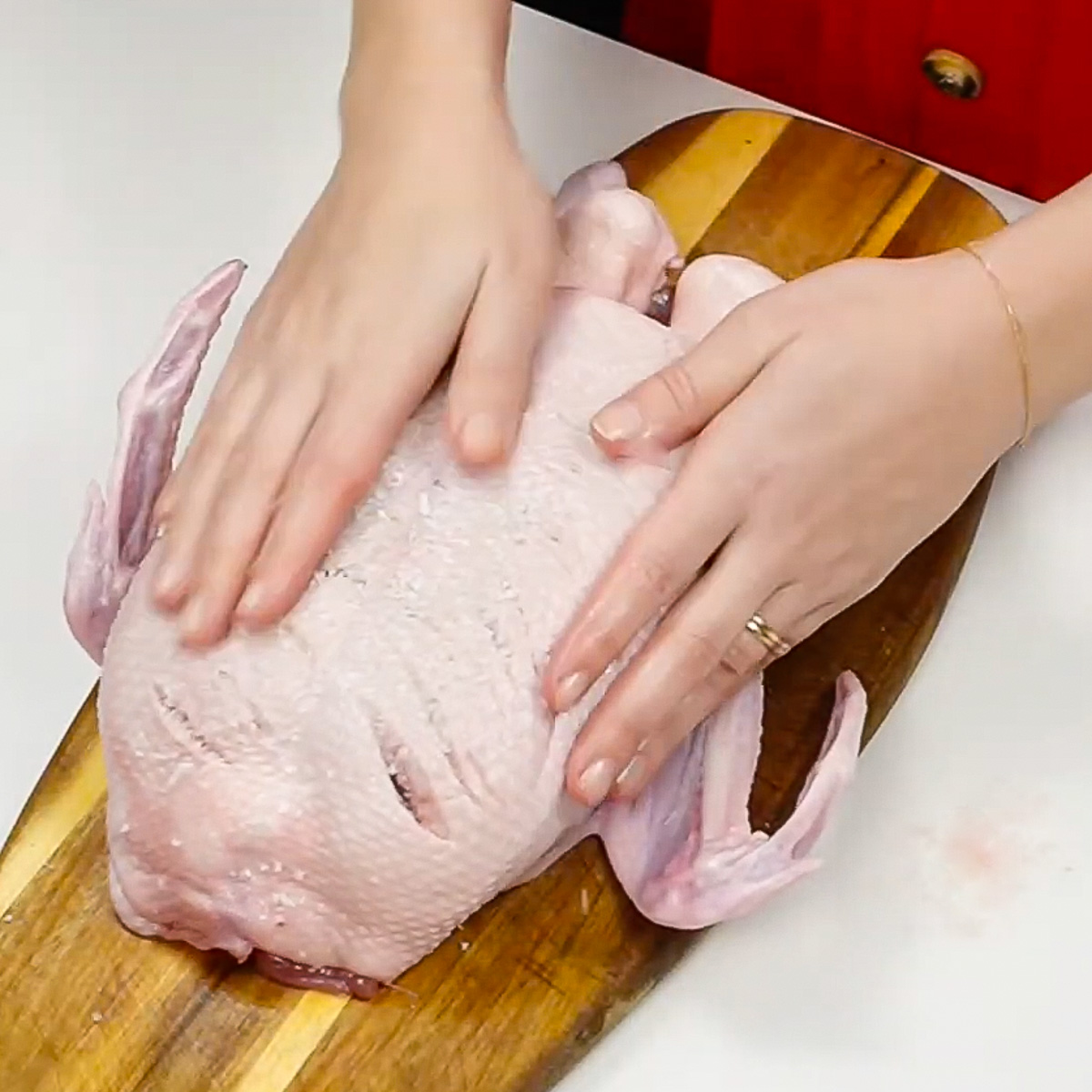
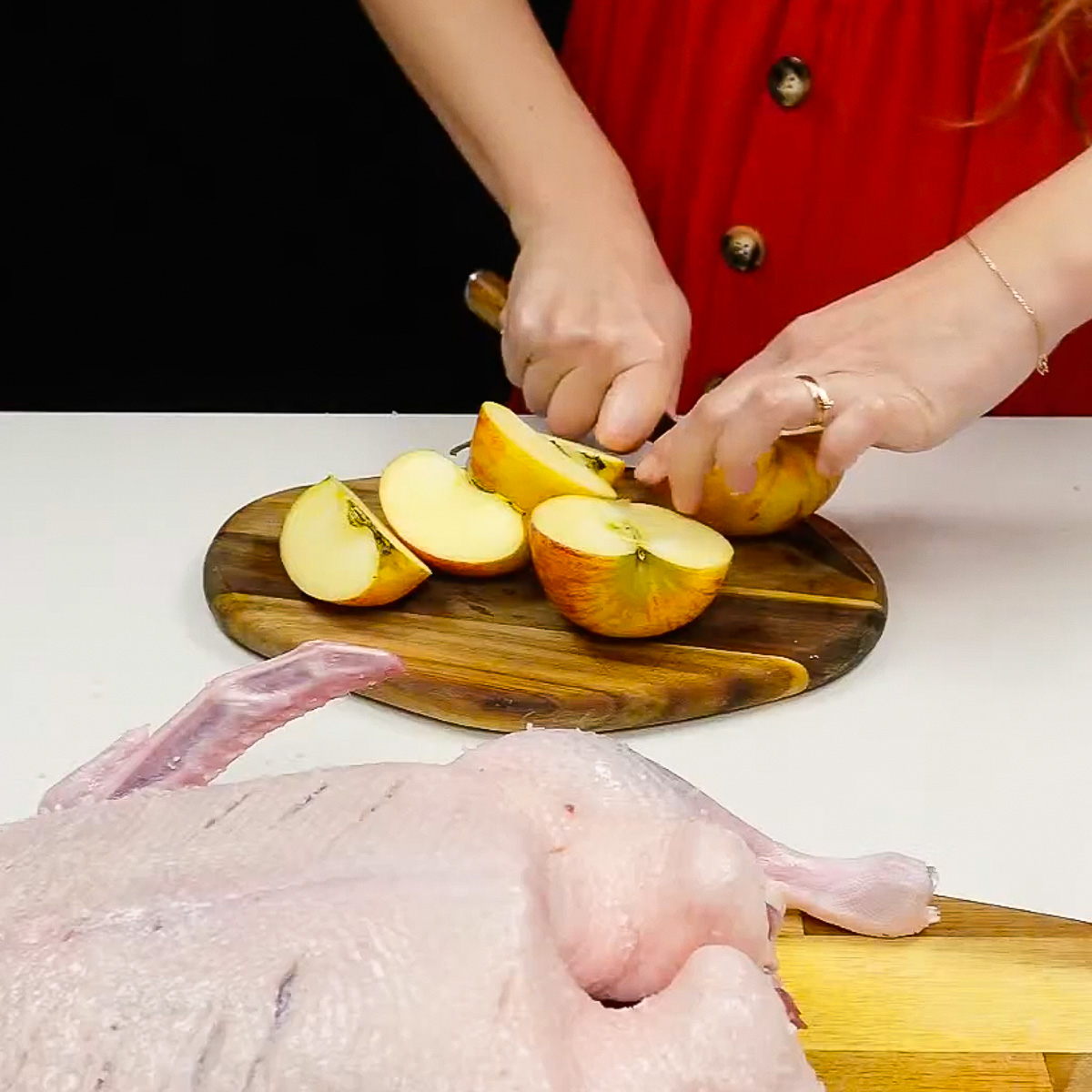
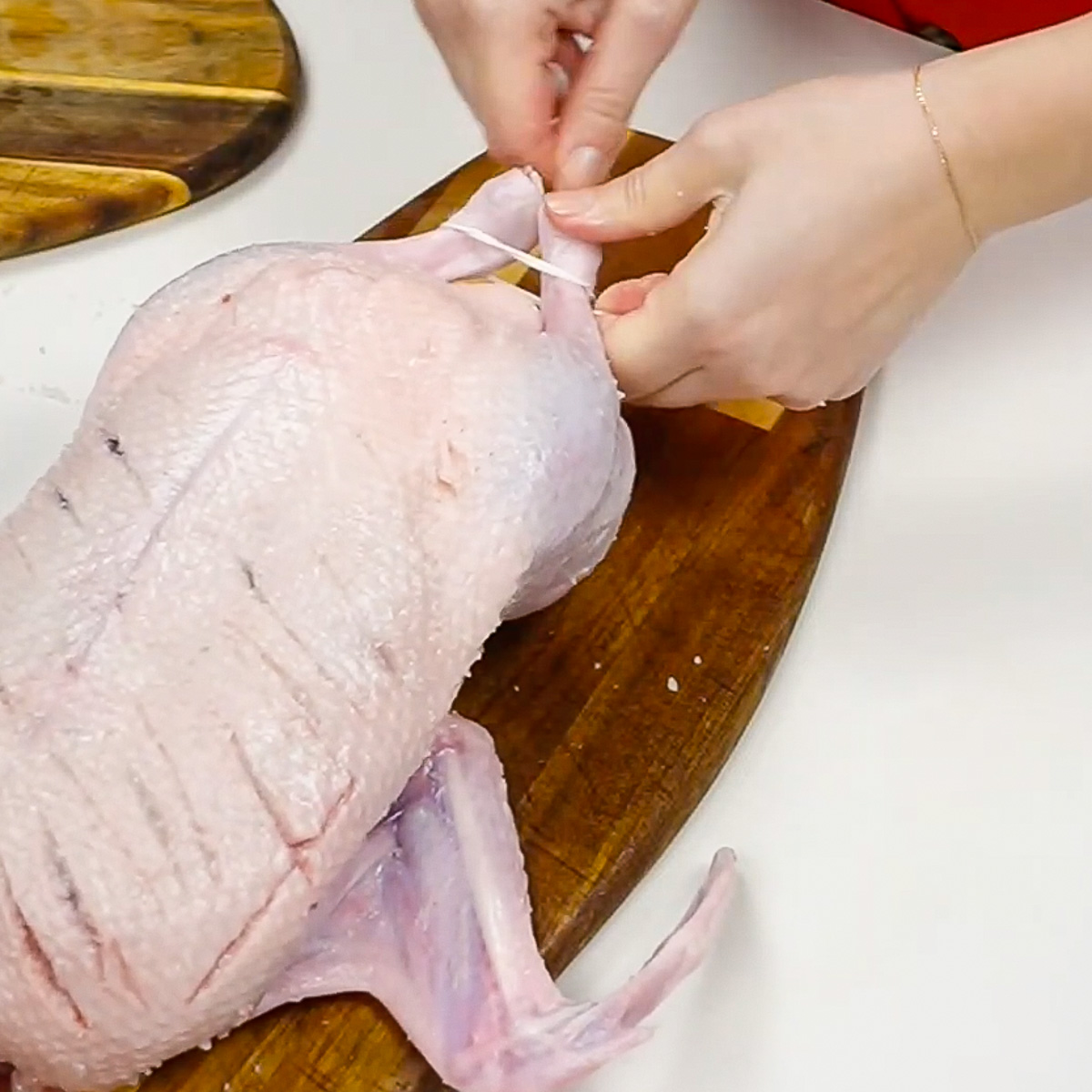
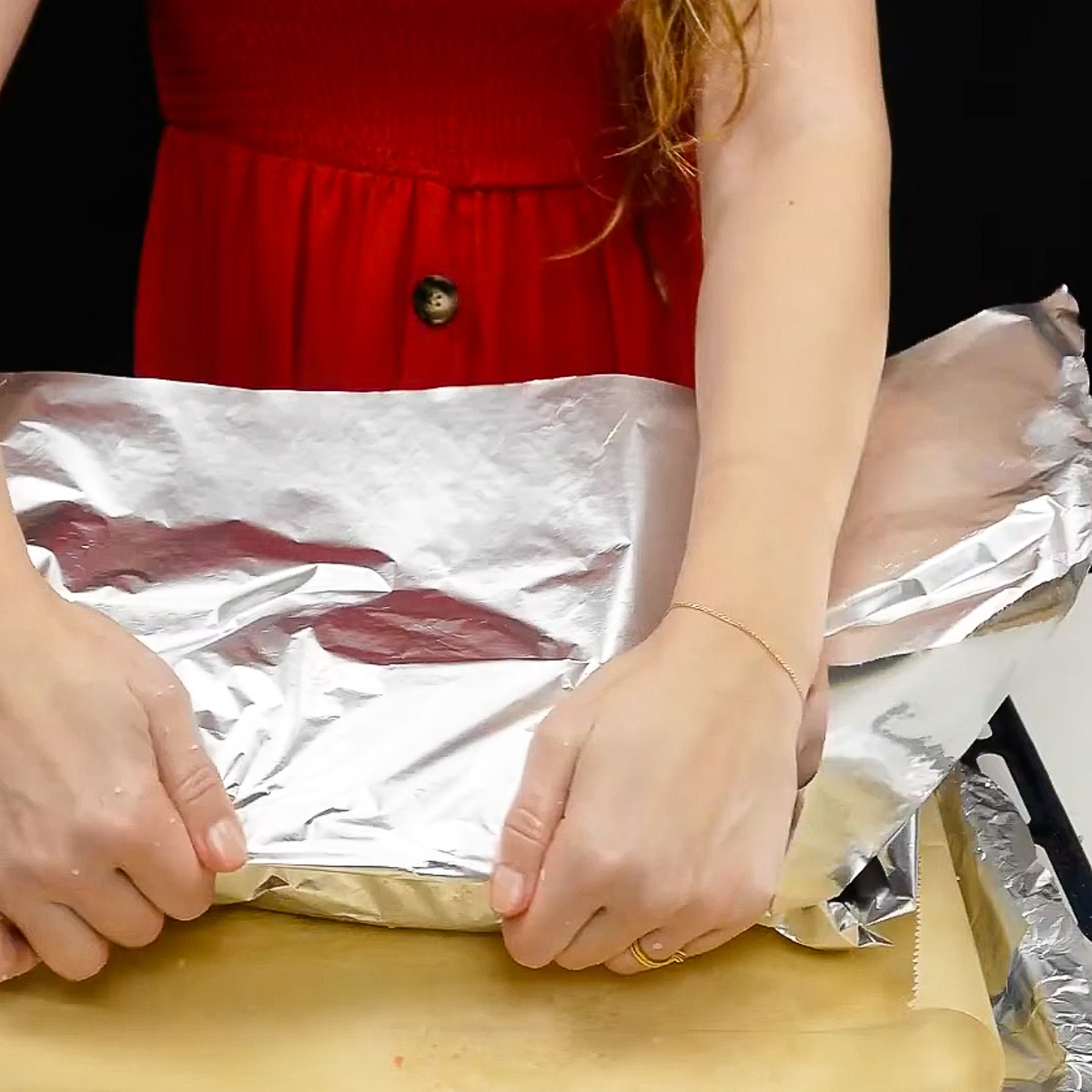
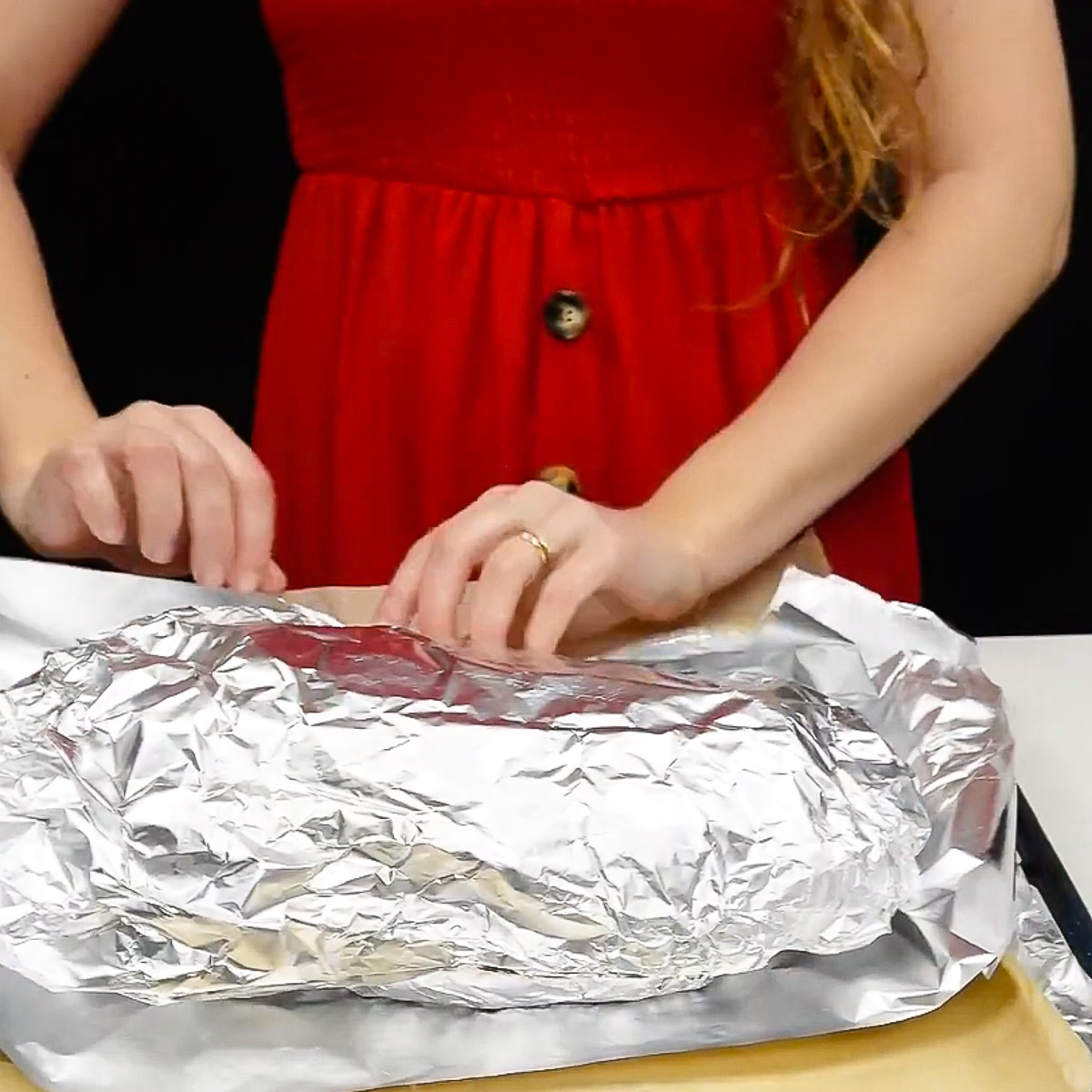
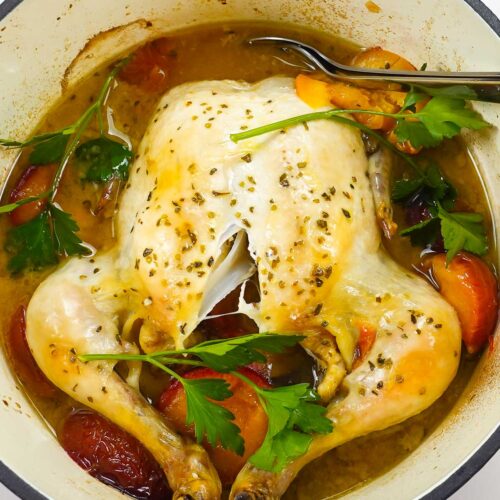
Step 2. Pierce the skin, Season the duck, Stuff with apples 5 minutesPlace the apple chunks loosely inside the cavity of the duck. Do not overfill; the apples will release aroma and moisture as the duck cooks. (I like to tight the legs and wings with thread). Tent the duck loosely with foil to trap steam and ensure the meat cooks evenly without drying out. |
Step 3. Roast the duck, Uncover for browning 2 hoursCook in the oven at 350°F (180°C) for about approximately 1 hour 30-45 minutes for a 4.4 lb / 2 kg duck. |
Step 4. Rest 15 minutesRemove the duck from the oven and let it rest 15-20 minutes before carving. This redistributes the juices and keeps the meat tender. |
Step 5. Serve 5 minutesSlice the duck and serve with the roasted apples. Drizzle some pan juices over the meat if desired. |
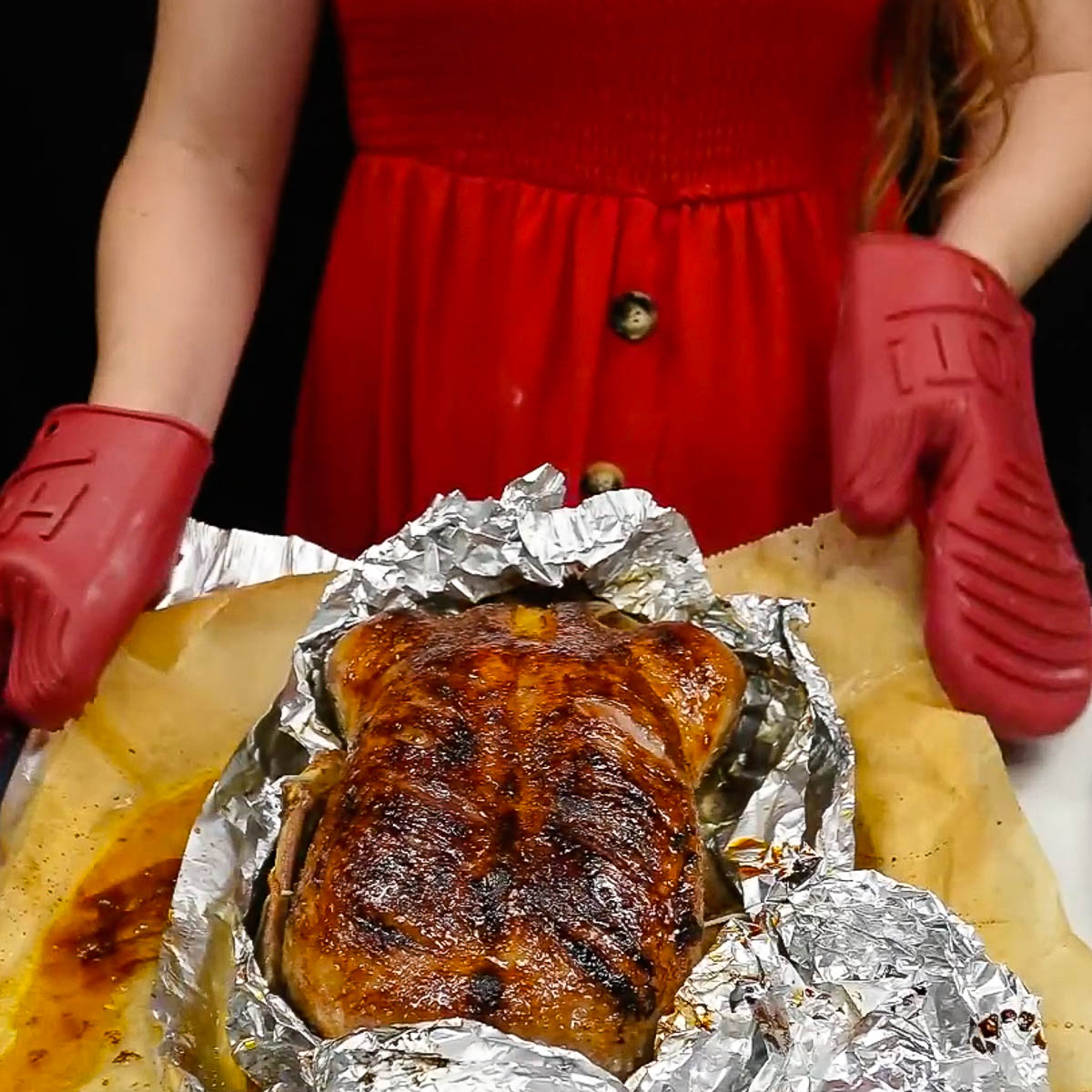

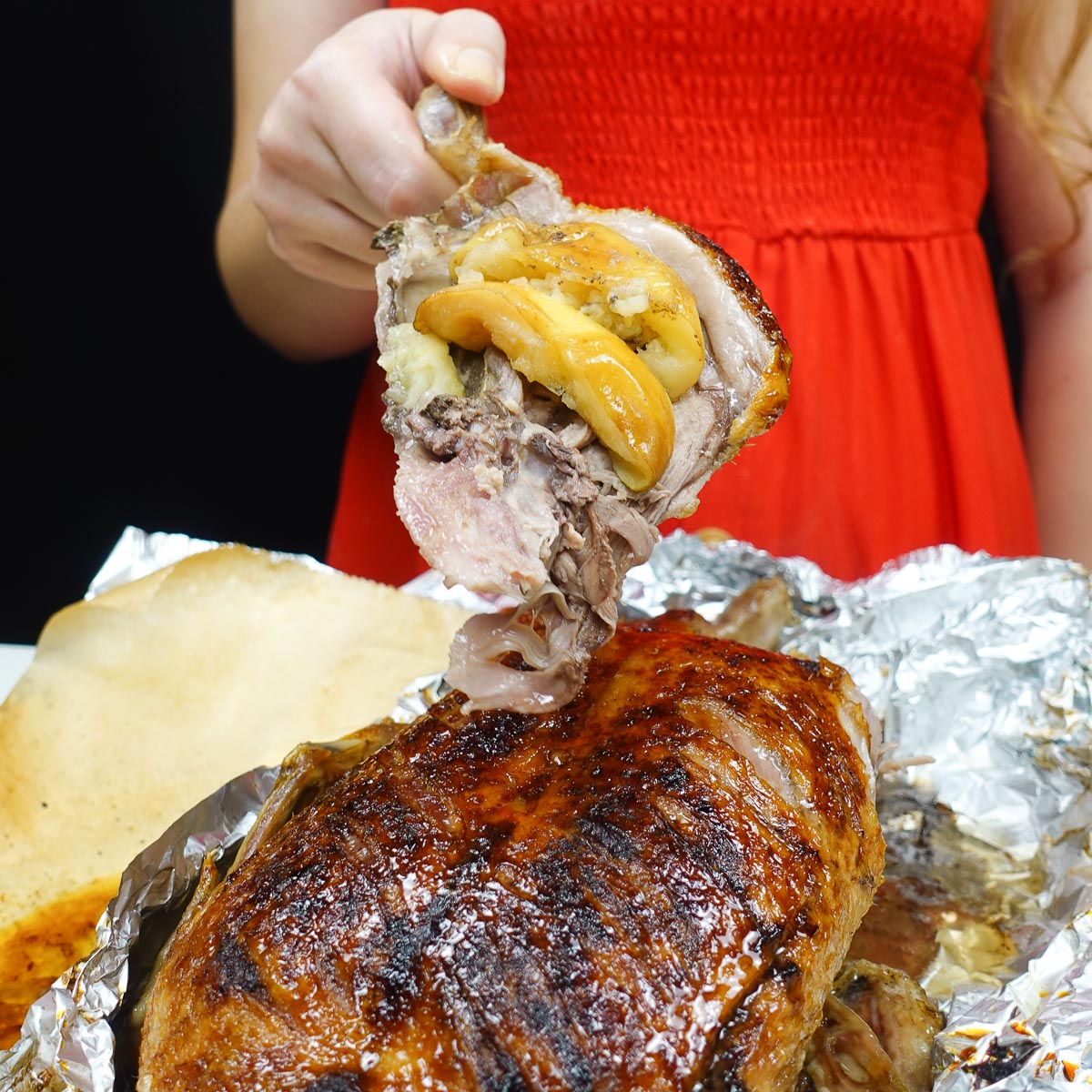
What makes this Roast Duck recipe truly special is its combination of simplicity, precision, and the rich, comforting flavors that develop during the roasting process. This recipe doesn’t rely on elaborate marinades or dozens of ingredients, yet the results feel refined, flavorful, and restaurant-worthy. The natural richness of the duck, enhanced by just salt, pepper, and a touch of olive oil, is beautifully complemented by the sweetness and aroma of apples roasted inside the cavity.
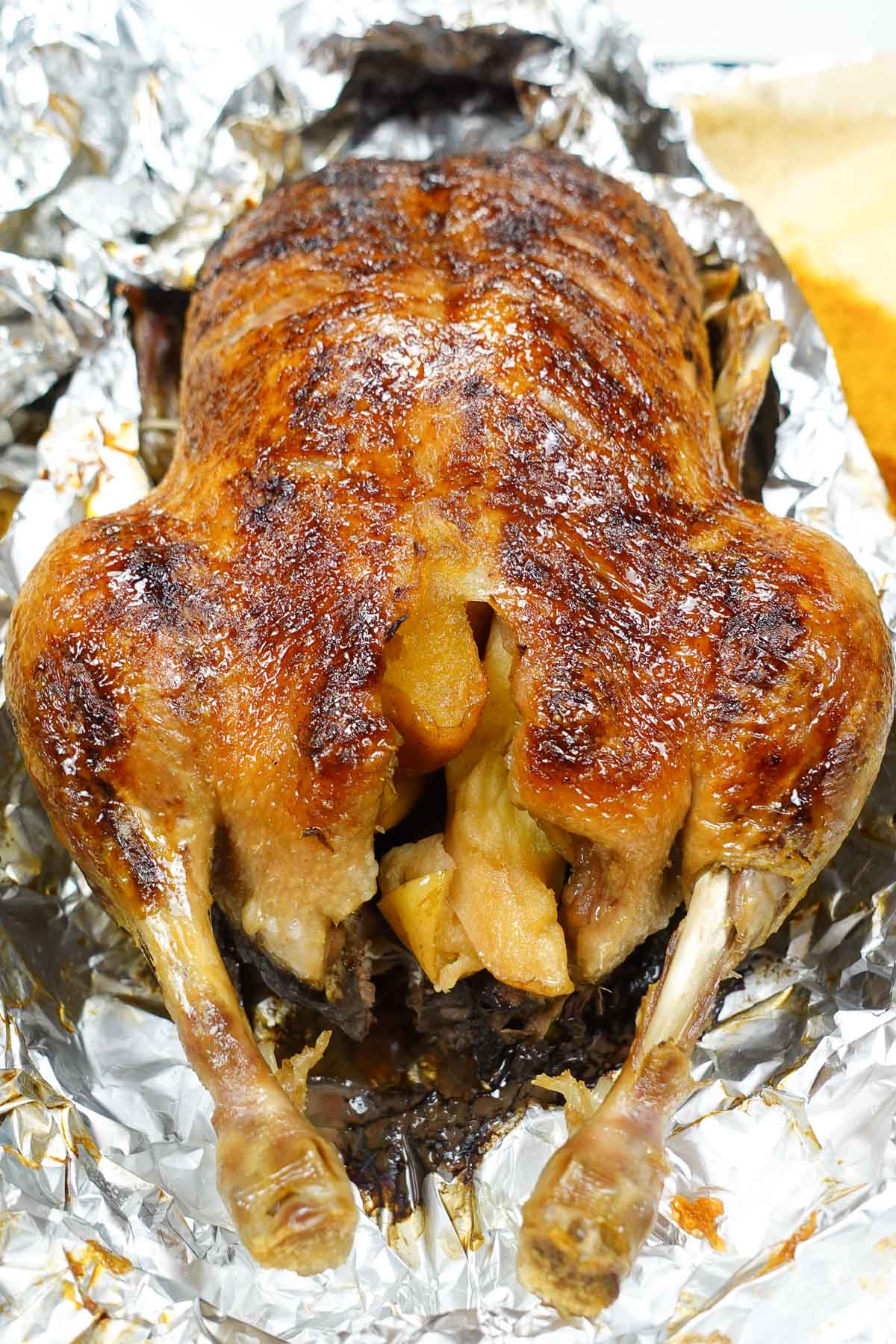
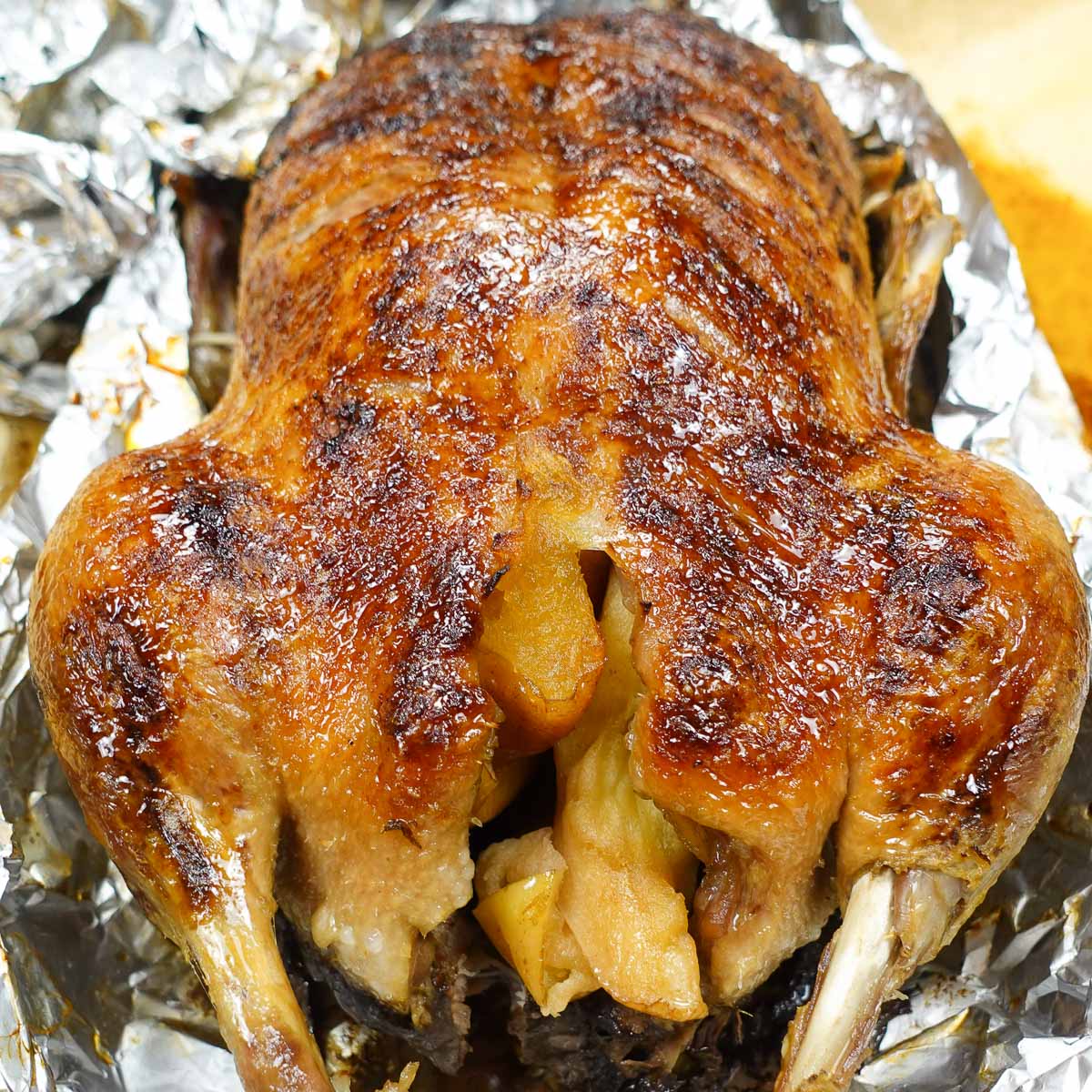
As the duck slowly cooks, the fat renders, the meat becomes tender, and the skin turns golden and crisp, creating a balance of textures and flavors that’s both satisfying and elegant. Each bite gives juicy, flavorful meat with a hint of fruity sweetness, making this a dish that’s as impressive to serve as it is delicious to eat.
Which season is this recipe best for?
Roast duck is best prepared during fall and winter, when cooler temperatures align naturally with richer, slow-roasted dishes. I usually make this duck when I crave a delicious roasted recipe that doesn’t require a lot of my time. The oven does all the work!
Duck contains a lot more fat than chicken, which you can use in many dishes after, for example, roasting potatoes, carrots, or even onions. Adding duck fat to soup or croutons can make them very flavorful, too.
Apples, which are used inside the duck, are also at their peak in autumn. Holidays, weekend family meals, and special gatherings are ideal occasions for this roast duck recipe, as the cooking process rewards patience and attention. If you want to make this recipe for spring gatherings, serve it with light salads, radishes, cucumbers, cherry tomatoes, and some sweet berry sauces such as strawberry, blueberry, or even cherry.
The key factor is to roast the duck properly!
Where can I buy the ingredients for this recipe?
A whole duck weighing around 4.4 pounds/2 kilograms can be found in most well-stocked supermarkets, butcher shops, and international food markets.
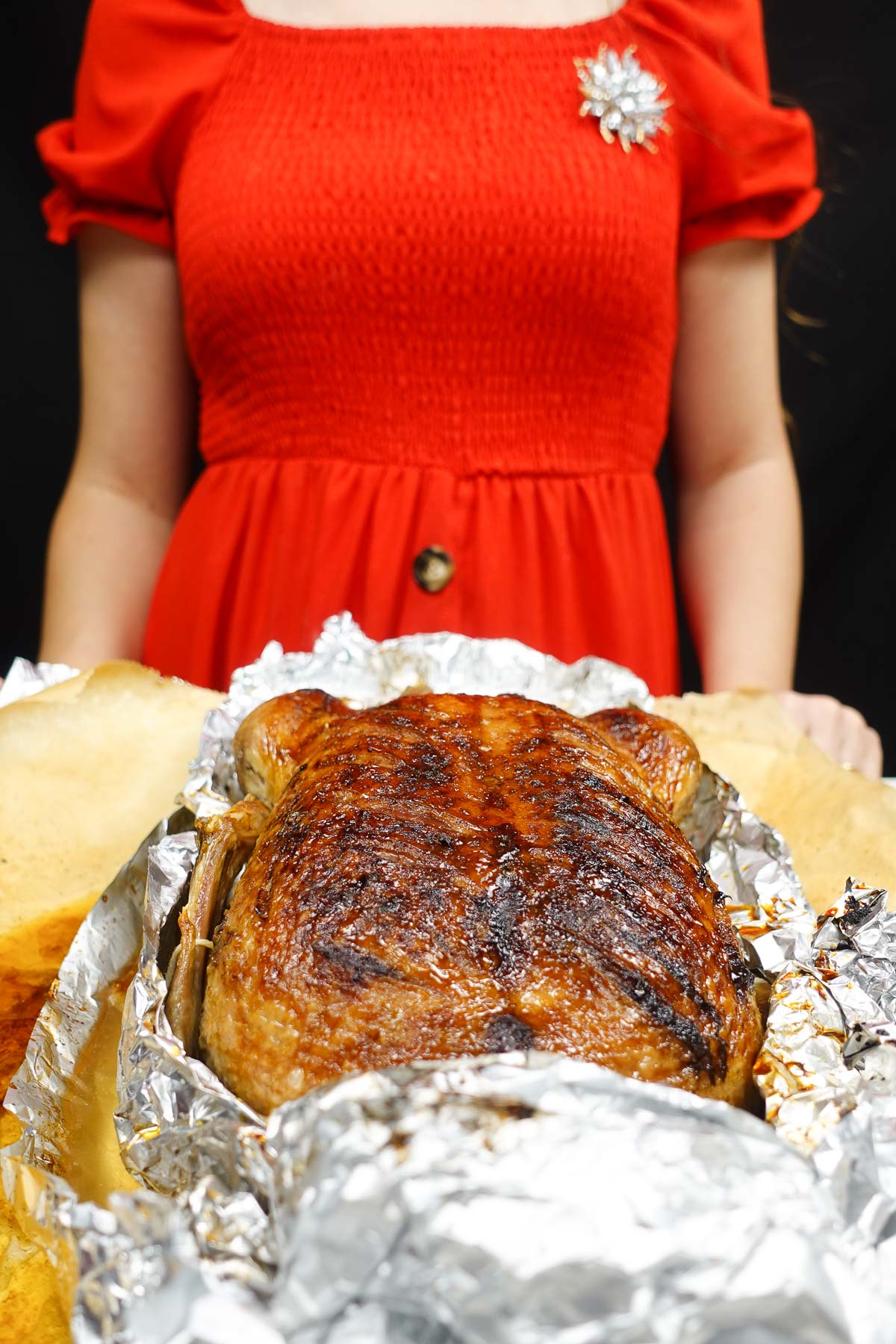
Asian grocery stores often carry excellent-quality ducks at competitive prices, while butcher shops allow you to ask questions about sourcing and freshness.
Frozen ducks are completely acceptable for this roast duck recipe, provided they are thawed slowly in the refrigerator over 24 to 48 hours.
Apples are widely available year-round, but firm varieties such as Granny Smith, Braeburn, or Honeycrisp are best because they hold their shape and release a gentle aroma rather than turning to mush.
Olive oil should be fresh and mild, not overly peppery or bitter. You can even skip the olive oil altogether, as the duck renders a lot of fat.
Salt and pepper should ideally be good-quality sea salt and freshly ground white or black pepper, as these small details significantly affect the final result.
Can I substitute the ingredients in this recipe?
This roast duck recipe is intentionally minimal, which means substitutions should be made carefully.
The duck itself should remain whole, as roasting pieces changes both cooking time and fat rendering behavior. If a 2-kilogram or 4.4-pound duck is unavailable, a bird between 1.8 and 2.3 kilograms, or roughly 4 to 5 pounds, will still work with minor timing adjustments.
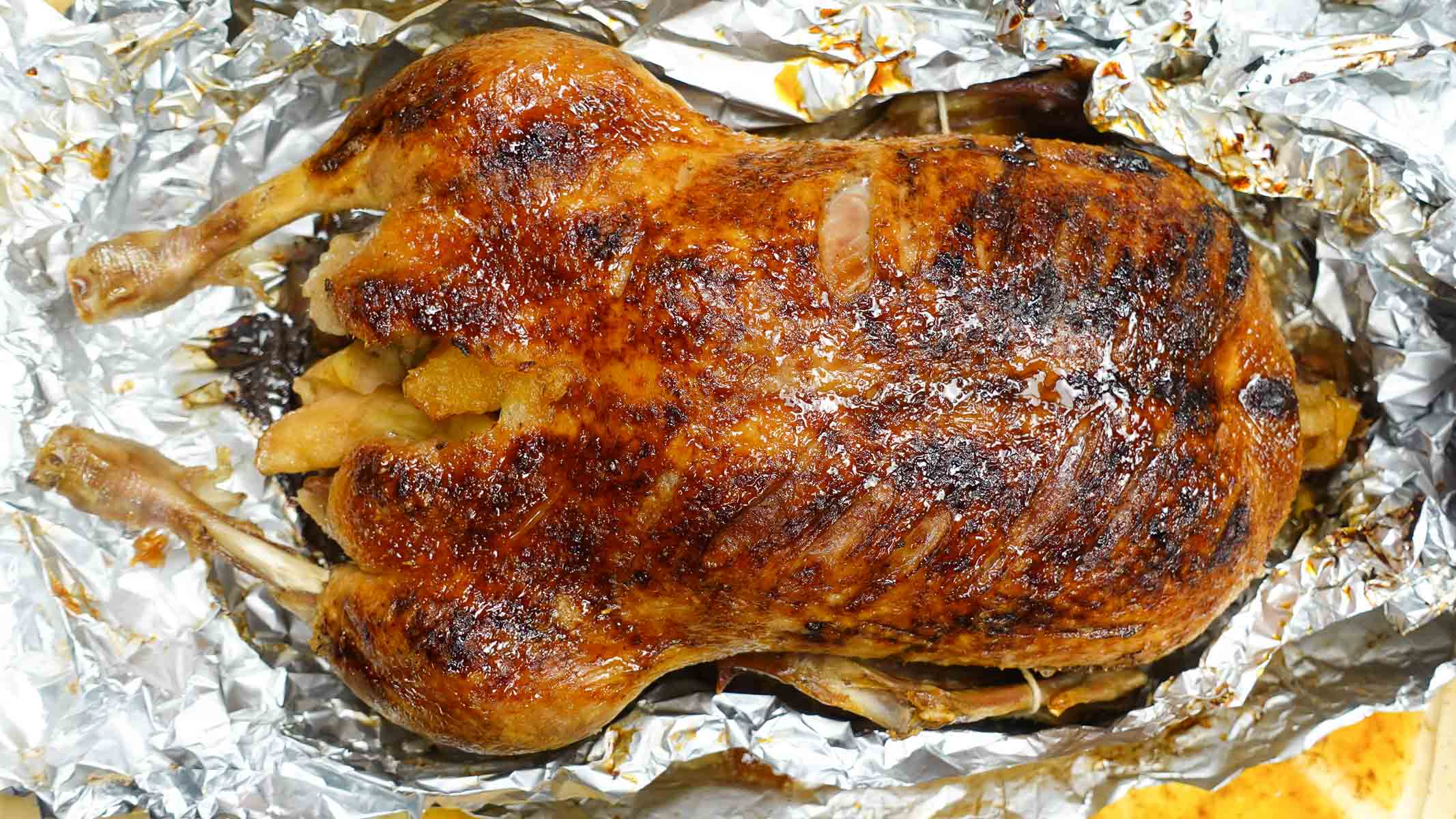
Apples may be substituted with pears or quince, which provide similar moisture and aroma.
Olive oil can be replaced with a neutral oil such as grapeseed or sunflower oil, or skipped. Sometimes, I skip oil because duck renders a lot of fat.
Salt should not be removed entirely, as it is essential for drawing moisture from the skin and achieving crispness.
Pepper is optional, but recommended for balance.
Can I make this recipe part of a menu?
Absolutely, and because the duck is so rich, the rest of your menu should be designed to balance that intensity. Roast duck is a heavy, fatty dish, so it acts as the anchor of the meal.
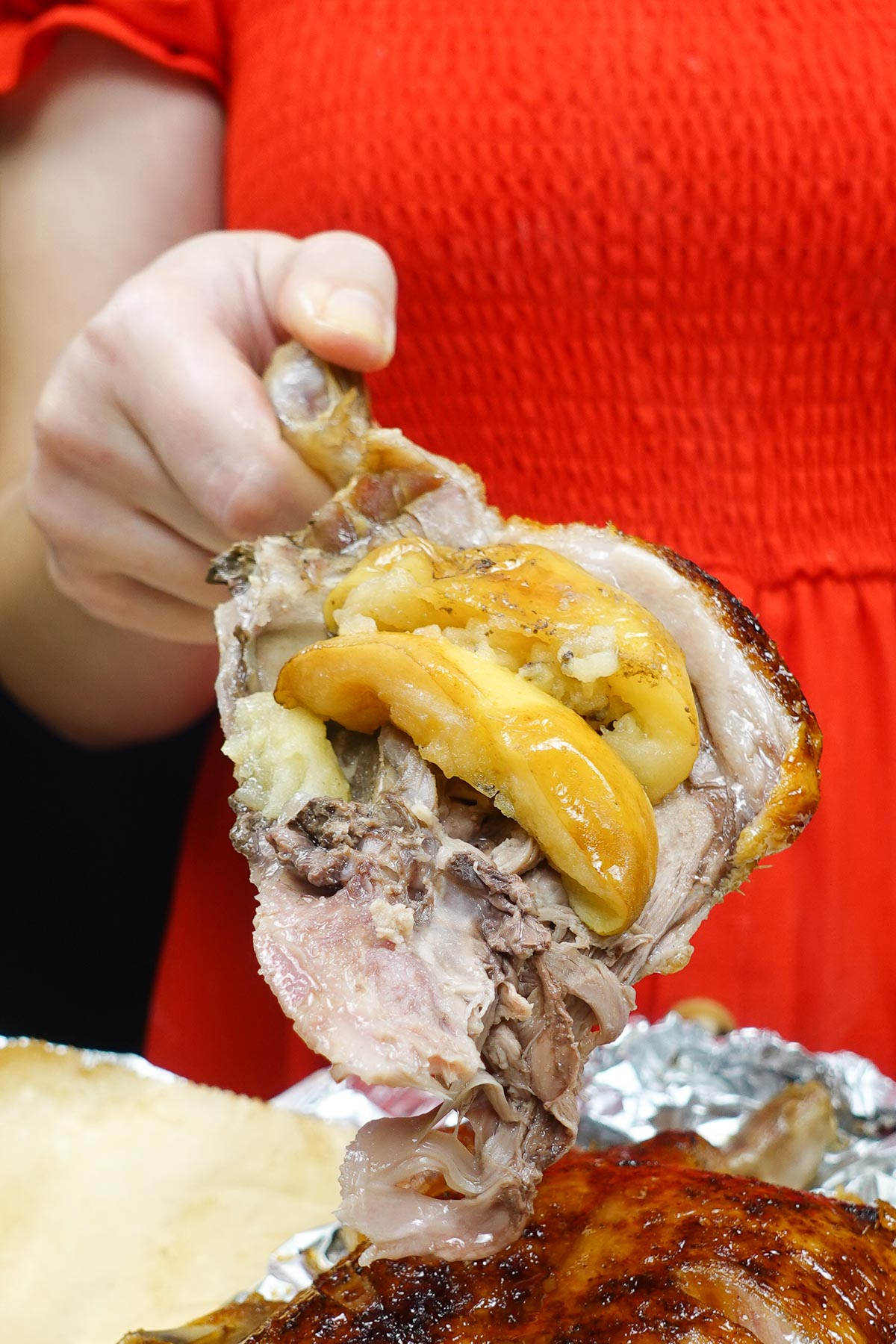
For a starter, avoid heavy creams or carbs. Instead, go for something acidic and sharp to wake up the palate, a light Apricot Shrimp Carpaccio or any other type of Carpaccio.
For side dishes served alongside the duck, you want to utilize the oven space or the stovetop efficiently. Roasted root vegetables like parsnips and carrots are excellent, or Mediterranean baby Baked Potatoes, because they can often roast in the same oven.
Do not pair it with heavy cream sauces or cheese-heavy sides, as the meal will become too heavy.
For desserts, go with light desserts such as Kiwi Pavlova or Blueberry Pavlova.
Recipe tips & tricks
Here are my steps on how to make this Roast Duck recipe perfect:
- One of the most important steps in this roast duck recipe is preparing the skin. Duck skin must be pierced carefully all over to allow fat to render during roasting. A sharp knife works well, but care must be taken not to pierce the meat beneath the skin.
- Seasoning should be generous, as duck meat benefits from assertive salting.
- The cavity should be loosely filled with two apples cut into chunks, which will perfume the meat without releasing excess moisture.
- Roasting the duck on a rack allows fat to drip away, preventing soggy skin.
- Excess fat should be drained from the pan during cooking to avoid smoking.
- Resting the duck after roasting is essential; this allows juices to redistribute and ensures moist meat.
How long can I store this recipe leftovers?
If you find yourself with leftovers, you are in luck, as duck reheats well. Once the meat has cooled to room temperature, you should carve it off the bone rather than storing the carcass whole.
Store the meat in an airtight container in the refrigerator for up to 3 days. The skin will lose its crispiness in the fridge – this is unavoidable.
To reheat, do not use the microwave, as this will destroy the texture and make the fat rubbery. Instead, place the meat in a small baking dish, cover it with foil to trap moisture, and warm it in a 350°F (175°C) oven until heated through.
Extra tip: if you want to attempt to re-crisp the skin, remove the foil for the last few minutes or give it a quick sear in a hot pan skin-side down.
You can also freeze the cooked meat for up to 1 month, though the texture may suffer slightly upon thawing.
Always save the carcass! Even if you have stripped the meat, the bones are incredible for making a rich duck stock that can be the base for soups or risottos later in the week. Yum!
Which drinks would you pair it with?
Pairing beverages with duck is one of the great joys. For a classic match, Portuguese red wines work beautifully. A Dão or Douro wine with red fruit and subtle earthy notes complements the rich, gamey flavor of the duck without overpowering it, while its natural acidity cuts through the fatty, crispy skin.
If you prefer white wine, a citrucy Vinho Verde or a slightly aromatic Encruzado pairs wonderfully. Their bright acidity balances the sweetness of the roasted apples and refreshes the palate between bites.
For non-alcoholic options, sparkling apple juice or a homemade fruit shrub with blackberries and a touch of vinegar, topped with soda water, gives both sweetness and tartness to match the dish perfectly.
Roast duck may seem fancy, but it’s really easy with my family method. We have been making it for more than 50 years, so we know how to make the duck taste perfect. With juicy meat, crispy skin, and sweet apples, it’s sure to be a hit at any meal. Give it a try and enjoy every bite!



2 comments Hide comments
Made it for the holidays, and it was a hit! Thank you!! My husband said I would need to make the same roast duck next year!!
Yay! That’s my favorite recipe, too!