

Portuguese Fried Octopus
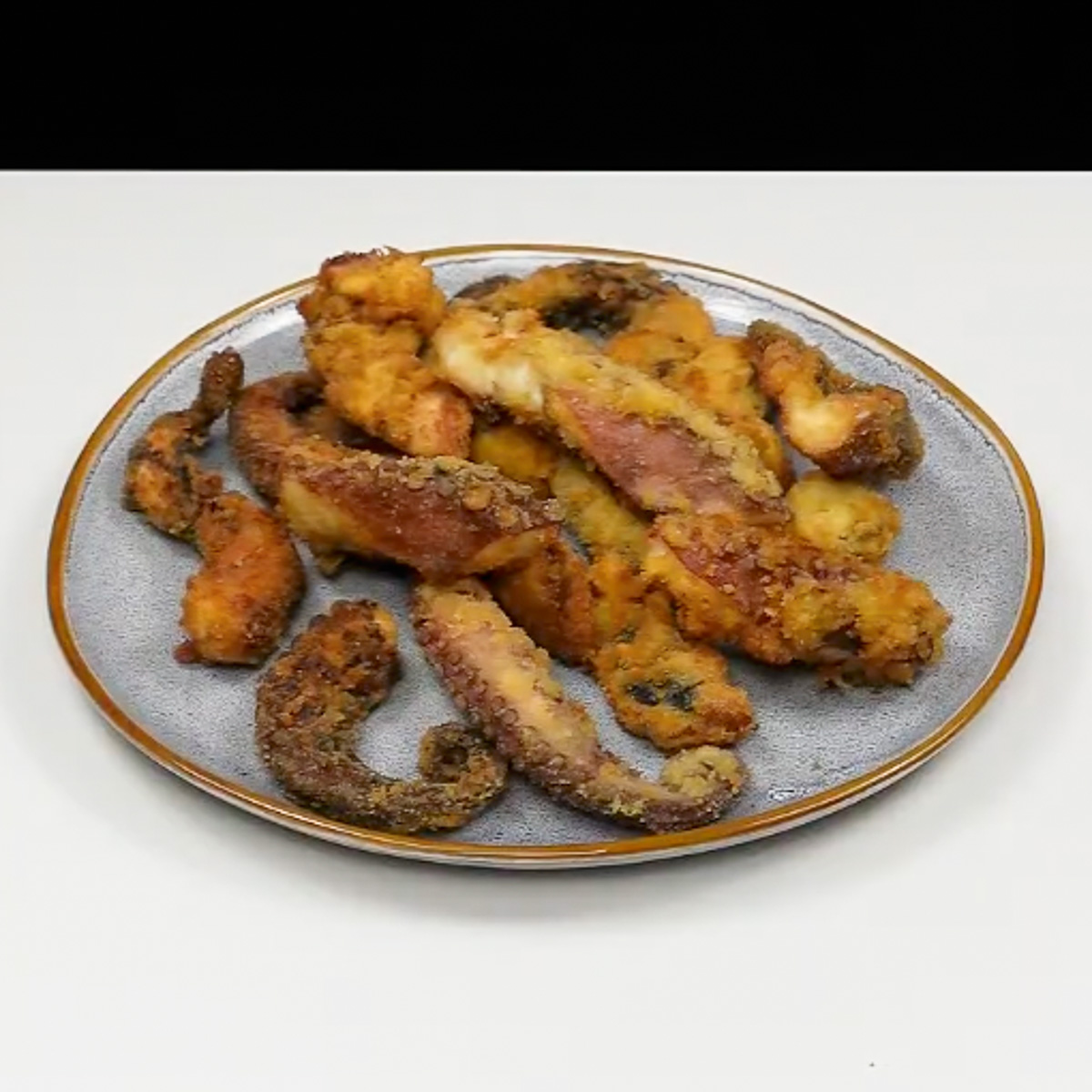
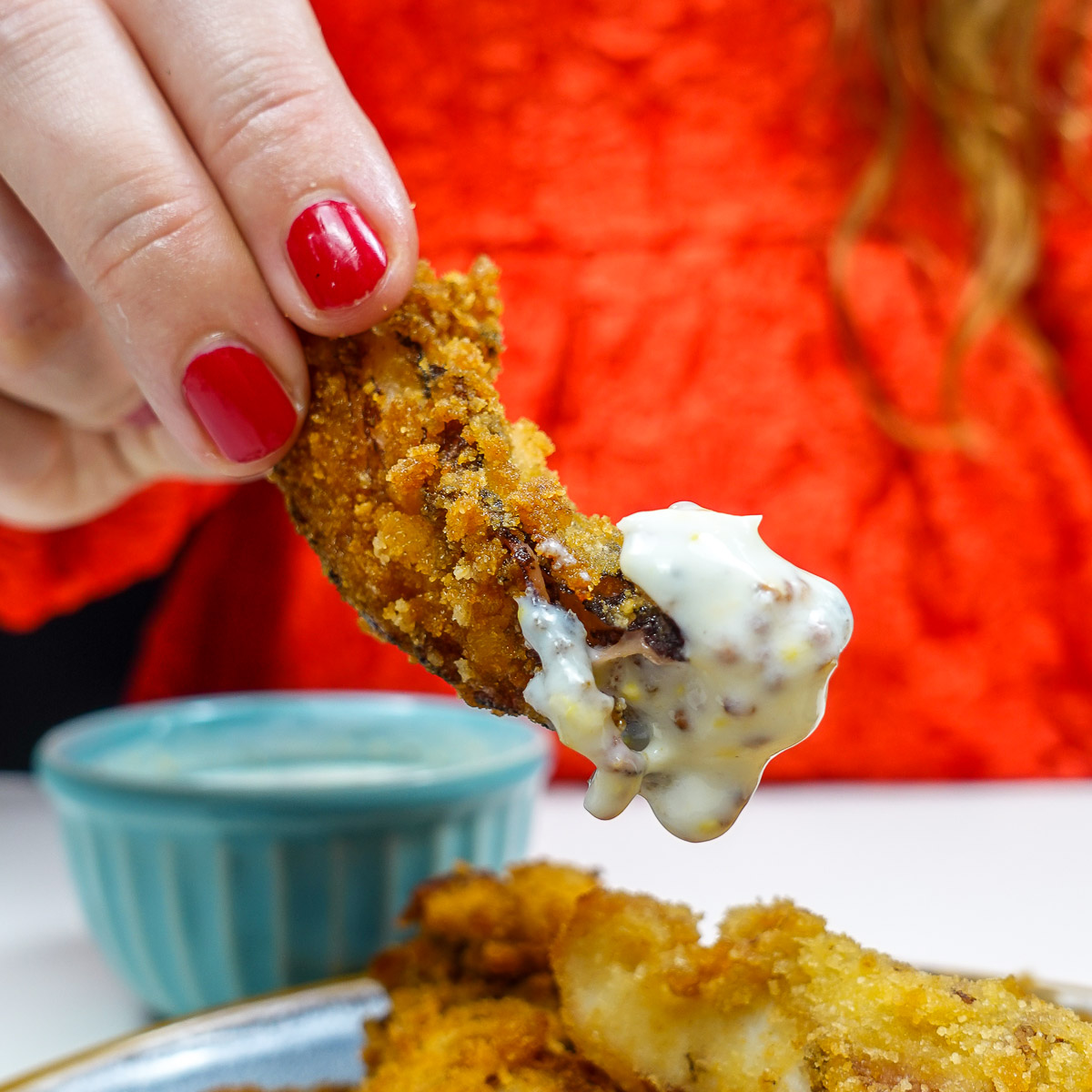
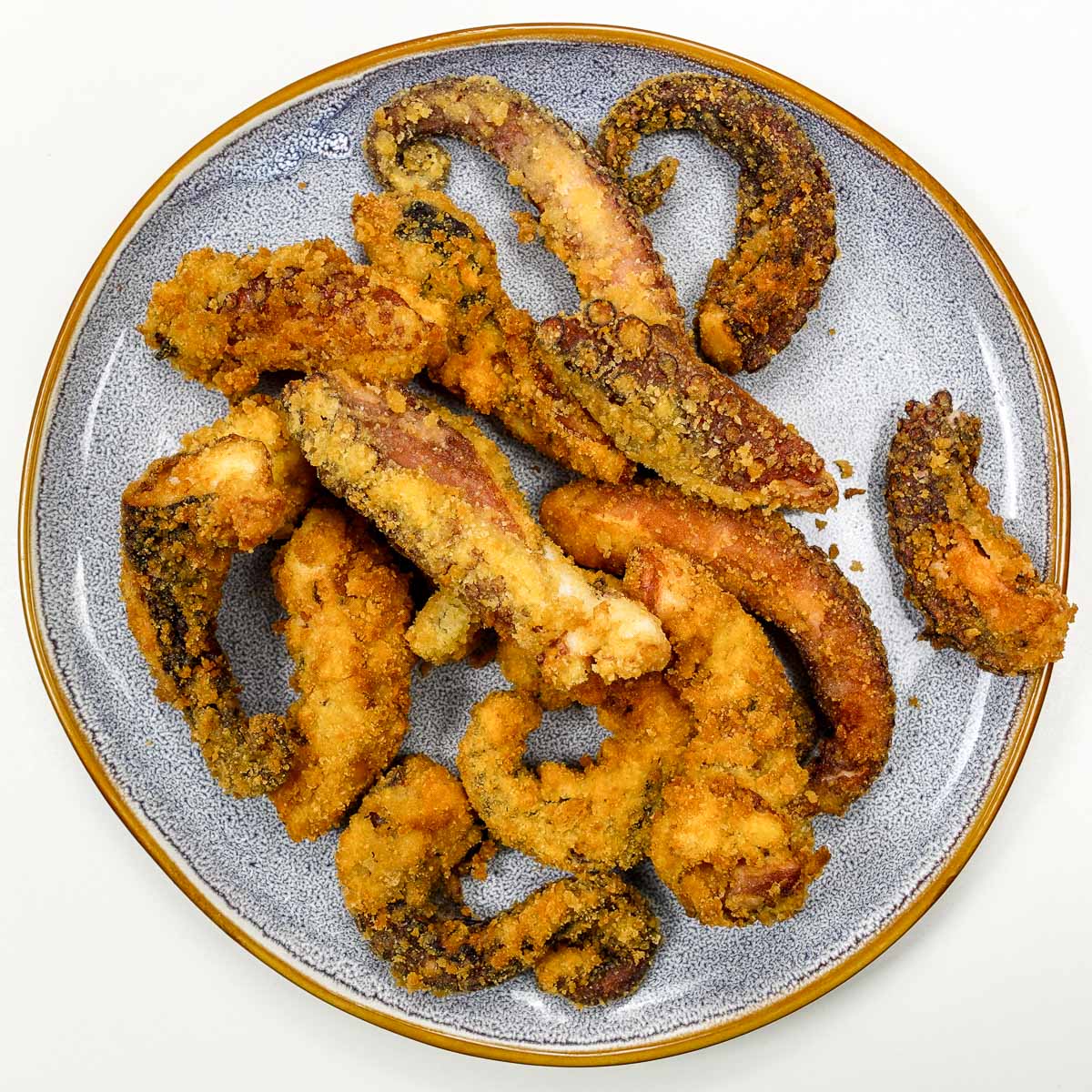
Crispy golden fried octopus with tangy yogurt sauce
This Portuguese Fried Octopus (Polvo Panado) with tangy yogurt-Dijon sauce is a crispy, golden, and restaurant-quality seafood classic.
Quick Info:
Latest Review
My type of an appetizer. Always looking for it when visiting Portugal. Glad I can now try it at home. Will let you know how it goes!!

Ingredients
For the boiled octopus:
- 2 pounds octopusyou can use pre-cooked octopus
- 1 onionfor boiling
- 2 bay leaves
- 2 ounces Port wine
- 0.5 gallons water
For the Fried Octopus:
- 2 cups vegetable oilfor frying
- 2 eggs
- 1 cup breadcrumbs+ 1 cup panko breadcrumbs
For the Sauce:
- 3 tablespoons greek yogurt
- 1 tablespoon Dijon mustard
- 1 tablespoon lemon juice
- 2 cloves garlic
- to taste salt
- to taste fresh cracked pepper
This Portuguese Fried Octopus (Polvo Panado) is a crispy and golden “petisco” that can be found in traditional “tascas” across the country. It is a beloved classic that I prepare in a very authentic, home-style way, which is very common in Portugal. You can find this dish in many seafood restaurants in Portugal.
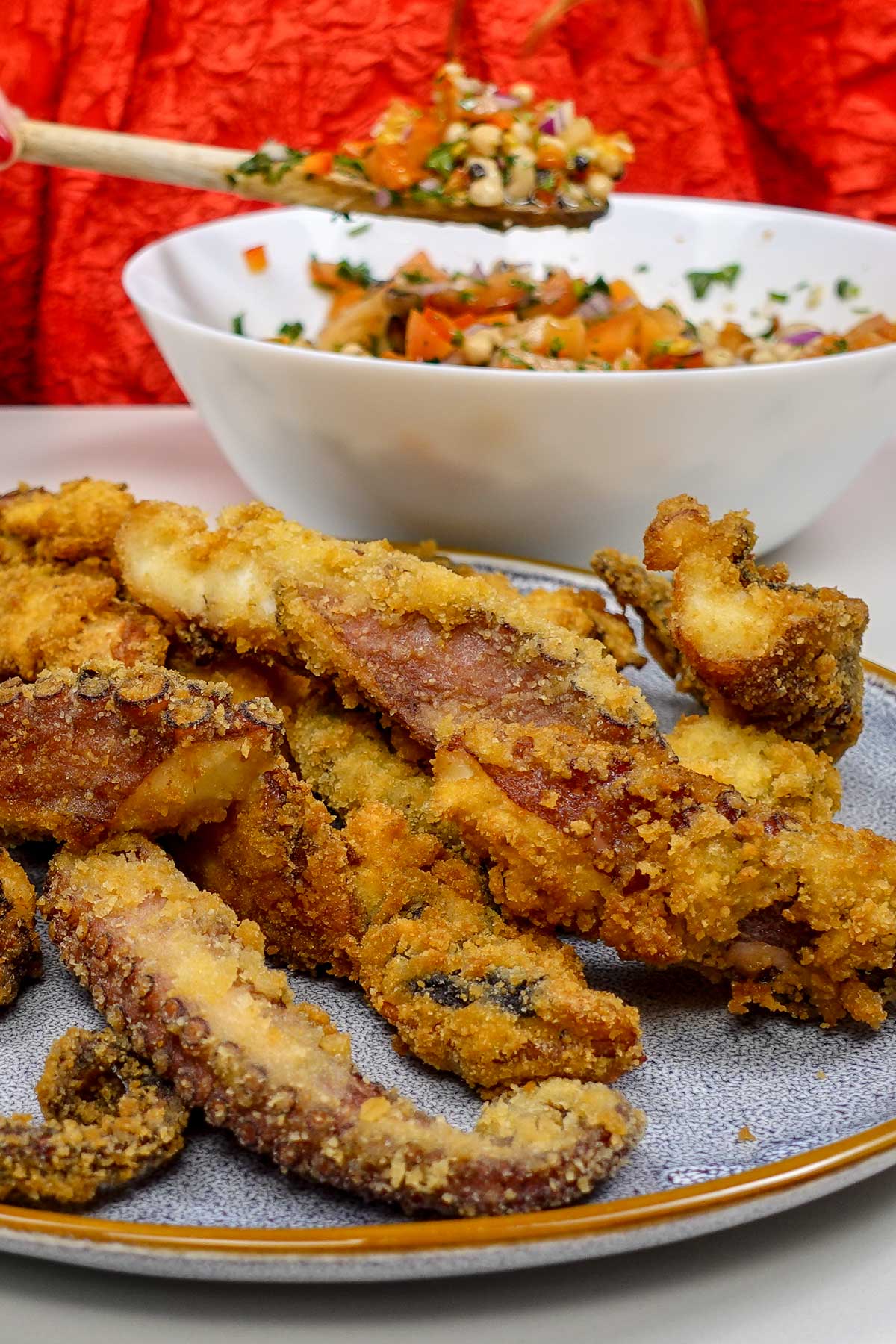
This Polvo Panado is made with simple, high-quality ingredients – fresh octopus cooked until tender, fine breadcrumbs, and a tangy yogurt-Dijon sauce.
This is not a complicated recipe, but it is one where small details, like slow-simmering the octopus and our dredging technique, make the difference between a rubbery bite and a tender, restaurant-quality crunch.

Ingredients
| For the boiled octopus: | |
| 2 pounds octopus you can use pre-cooked octopus | |
| 1 onion for boiling | |
| 2 bay leaves | |
| 2 ounces Port wine | |
| 0.5 gallons water | |
| For the Fried Octopus: | |
| 2 cups vegetable oil for frying | |
| 2 eggs | |
| 1 cup breadcrumbs + 1 cup panko breadcrumbs | |
| For the Sauce: | |
| 3 tablespoons greek yogurt | |
| 1 tablespoon Dijon mustard | |
| 1 tablespoon lemon juice | |
| 2 cloves garlic | |
| to taste salt | |
| to taste fresh cracked pepper | |
Nutrition per 1 serving
Please note that I am not a nutritionist. The nutrition information is provided for reference only.
How to make Portuguese Fried Octopus
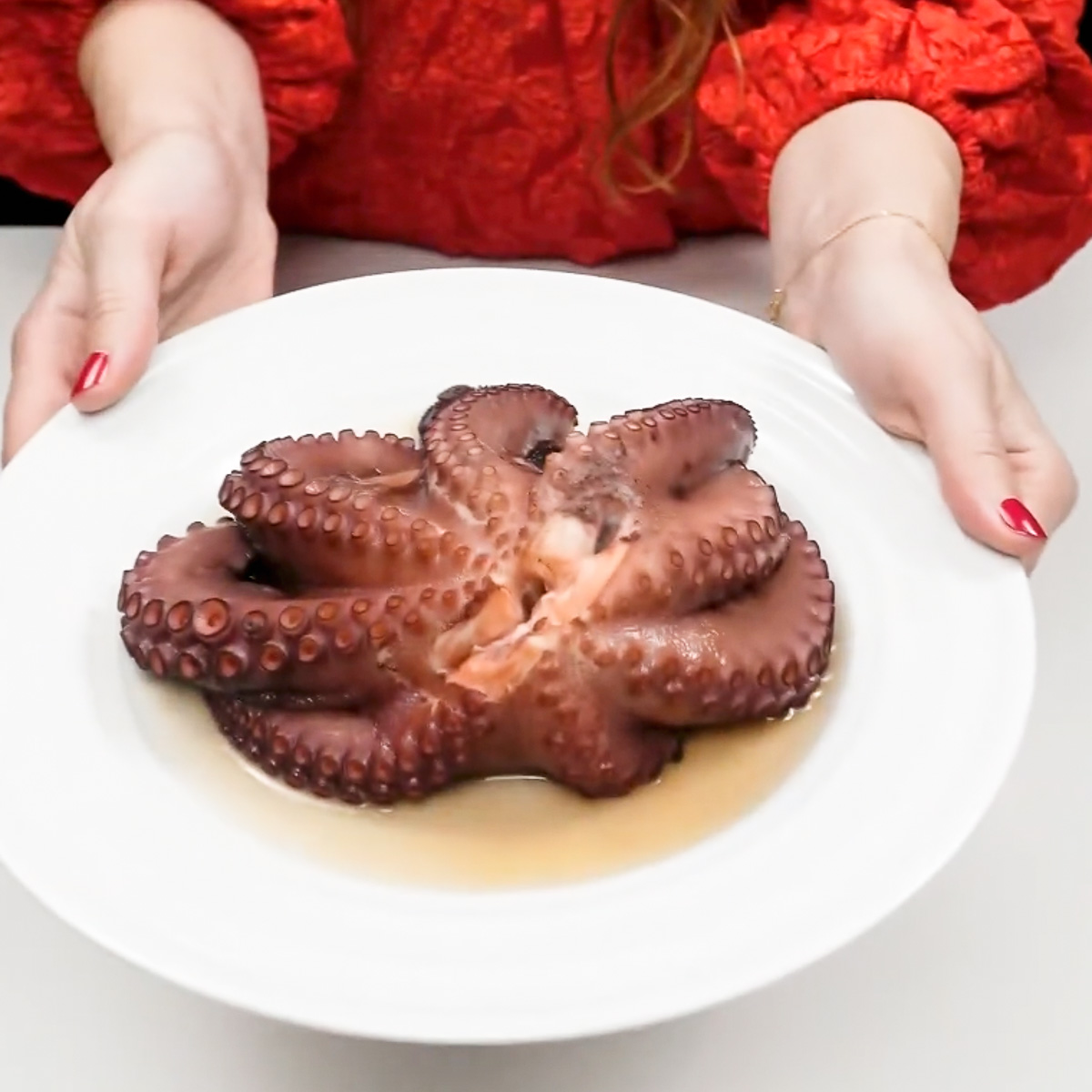
Step 1. Cook the Octopus from Scratch 50 minutesPlace the octopus in a large pot with one whole onion and two bay leaves. Do not add water; the octopus will release its own juices. Cover and simmer over medium-low heat for about 45–50 minutes, or until a fork easily pierces the thickest part of the tentacle. Remove and let it cool completely. |
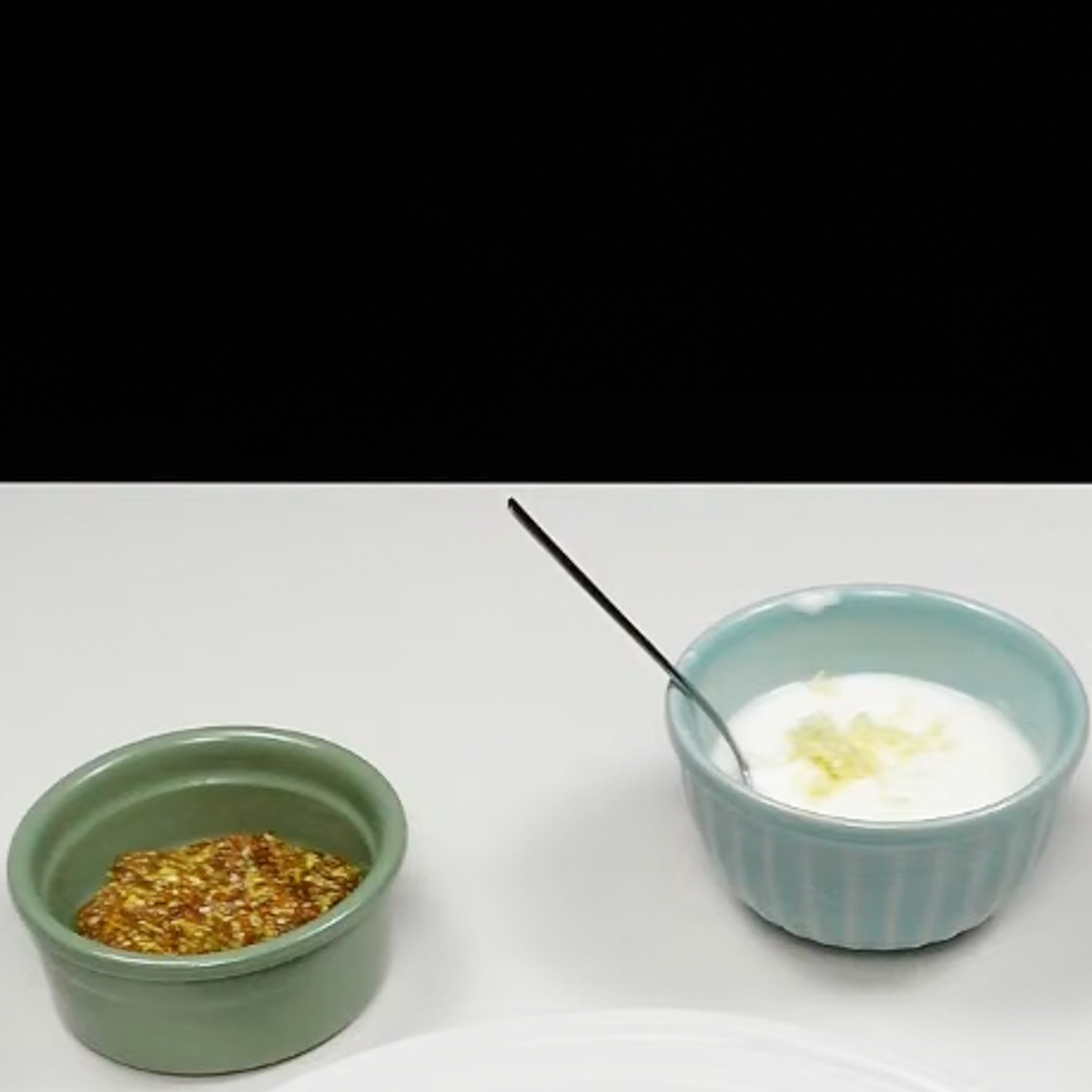
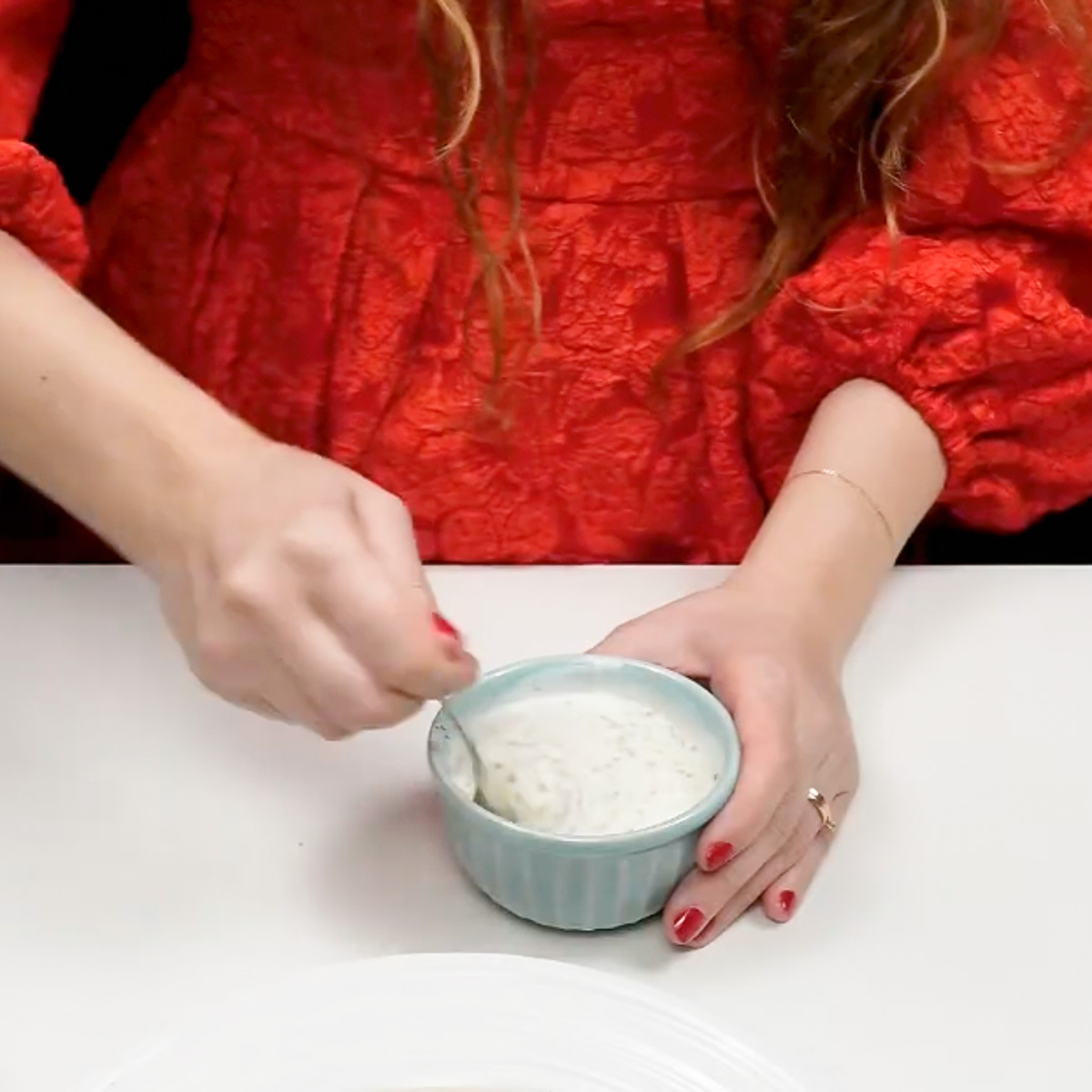
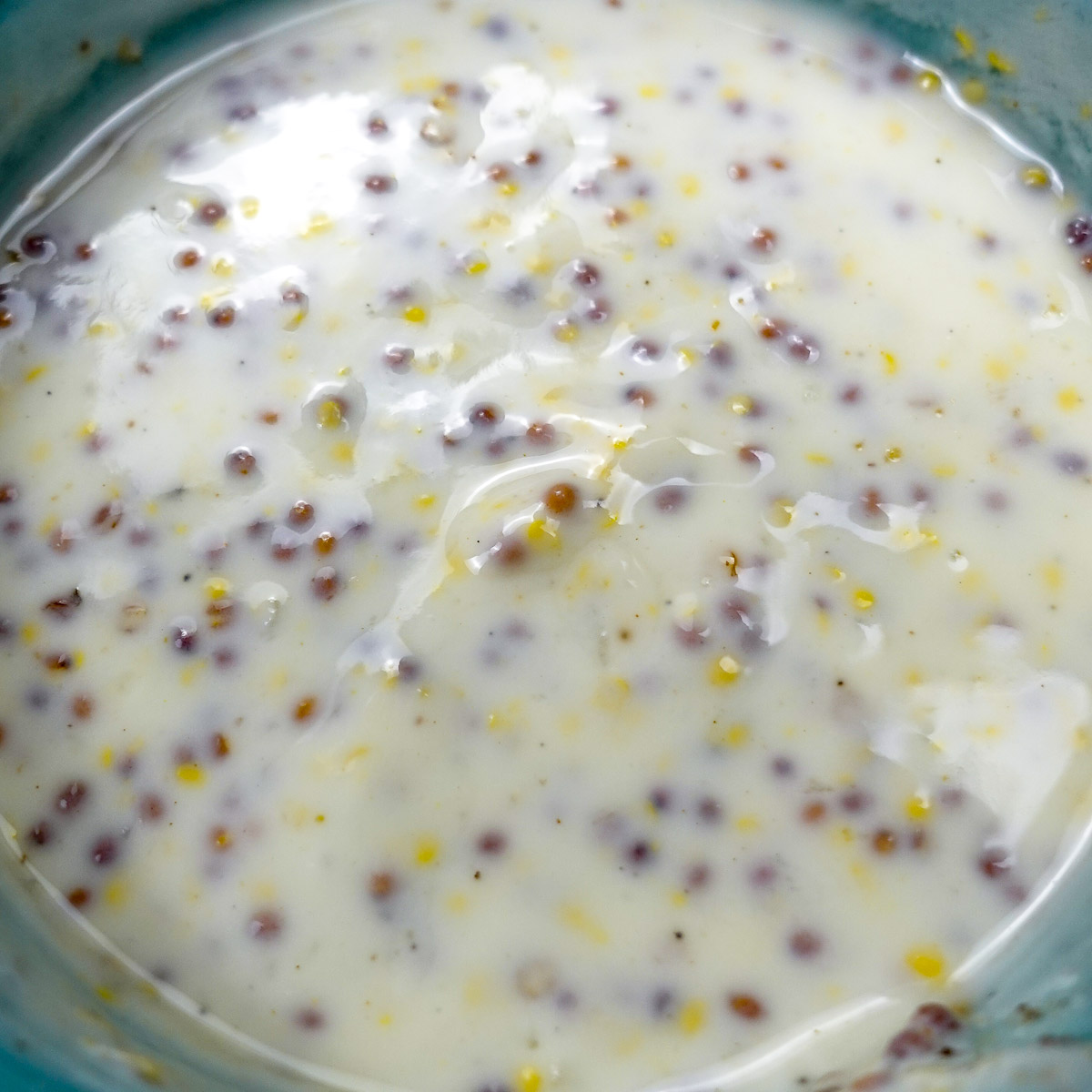
Step 2. Prepare the Sauce 5 minutesCombine together the Greek yogurt, Dijon mustard, grated garlic, and lemon juice. Add a pinch of salt and pepper. Chill until you are ready to serve. |
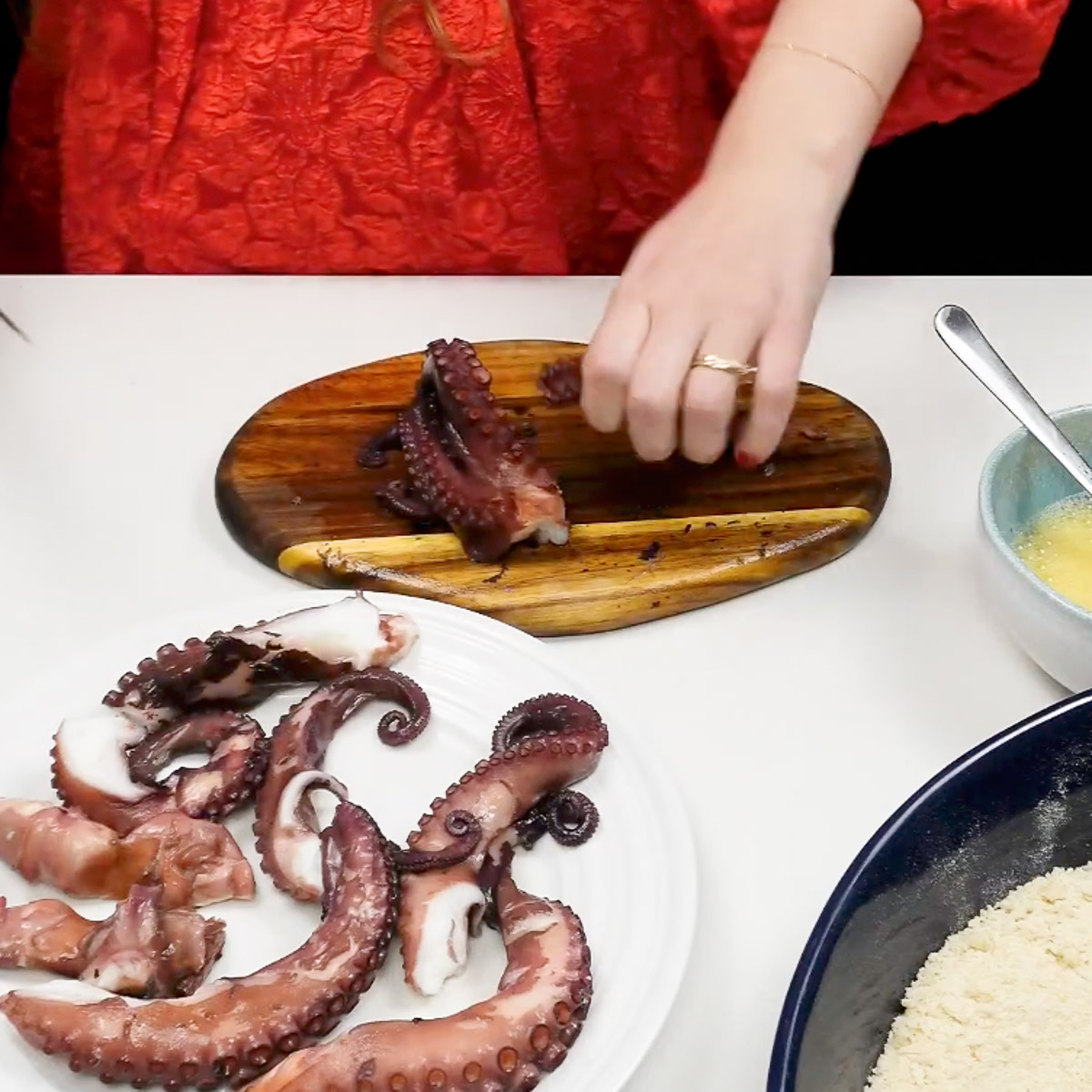
Step 3. Dry and prepare octopus tentacles 5 minutesOnce cooled, cut the tentacles. Use paper towels to pat them dry. |
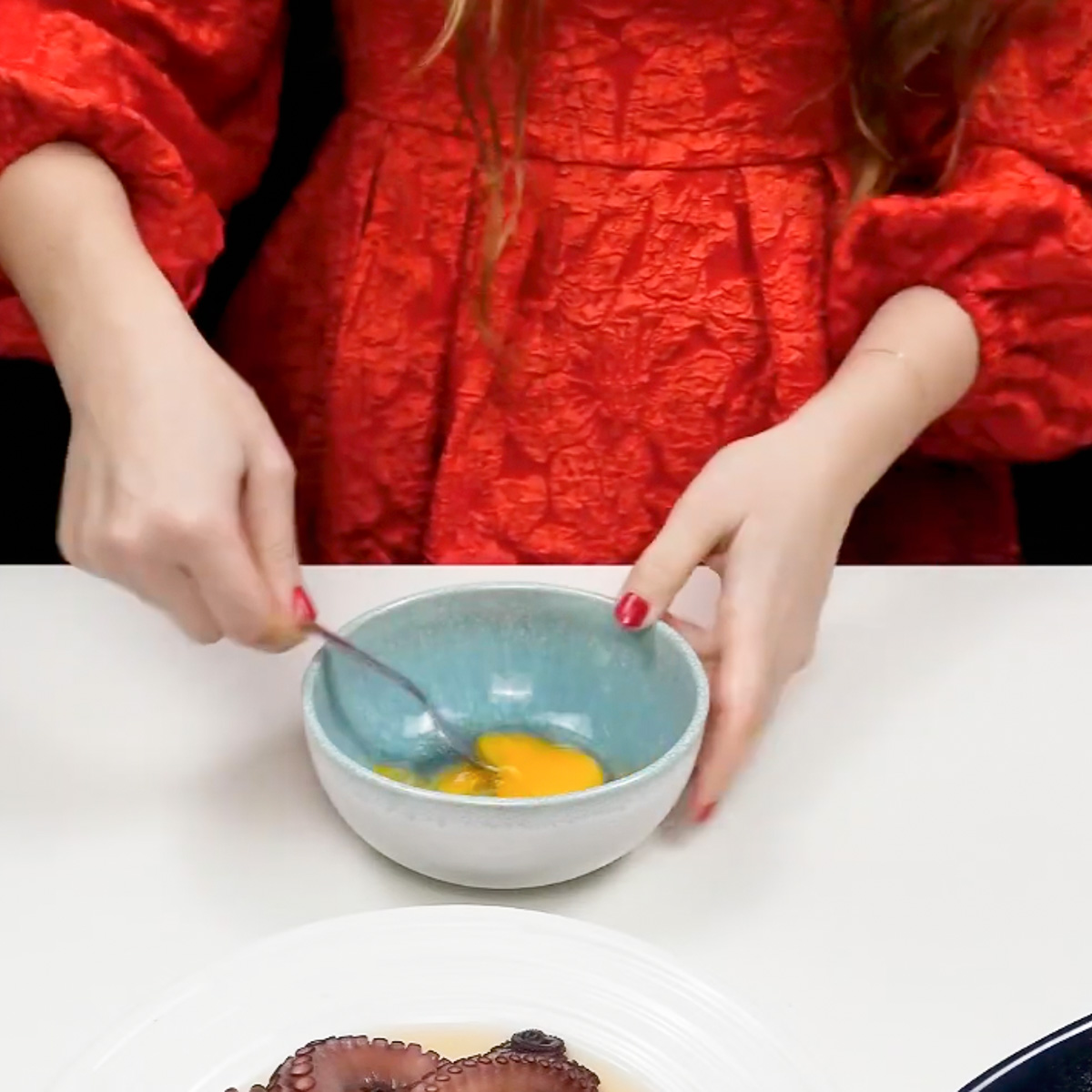
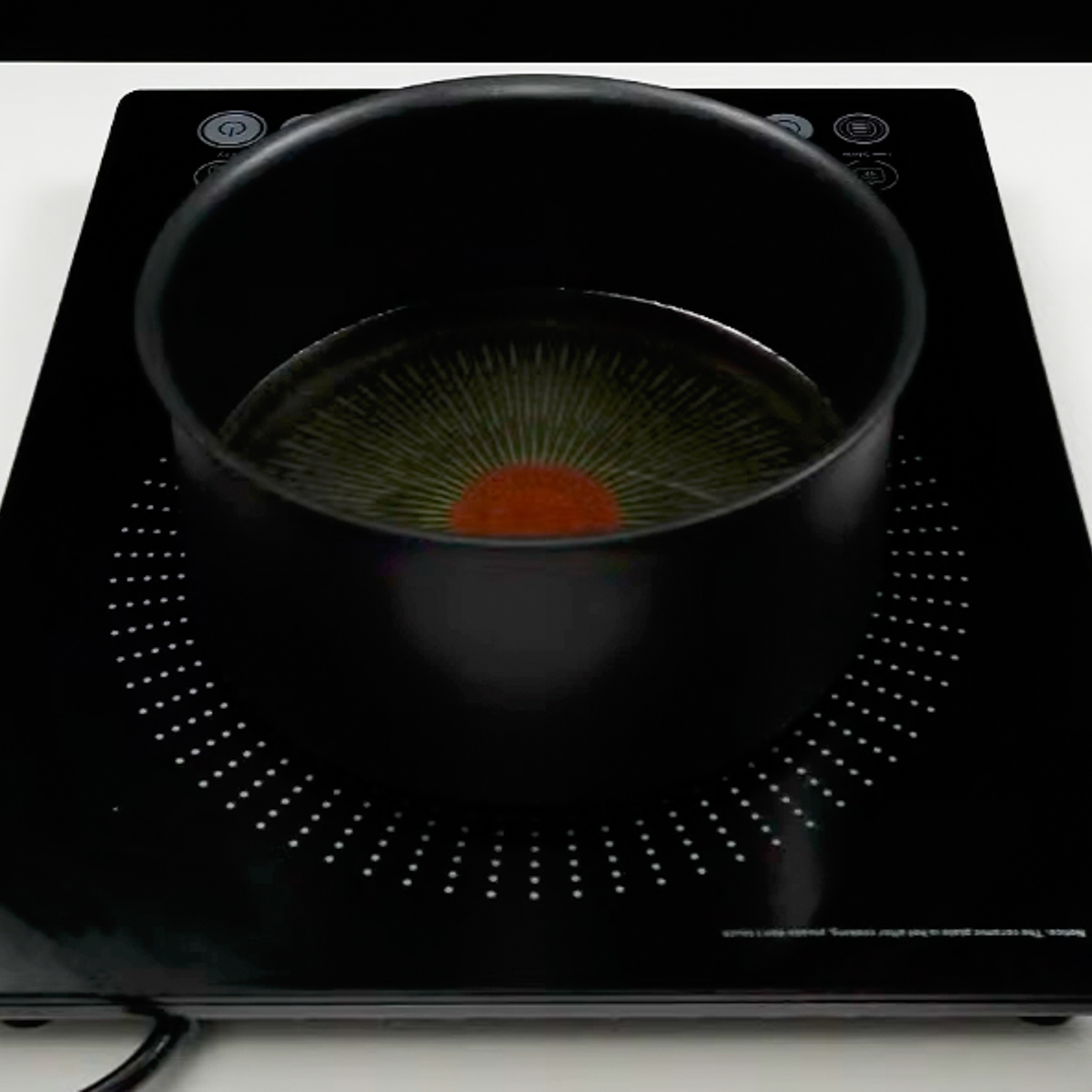
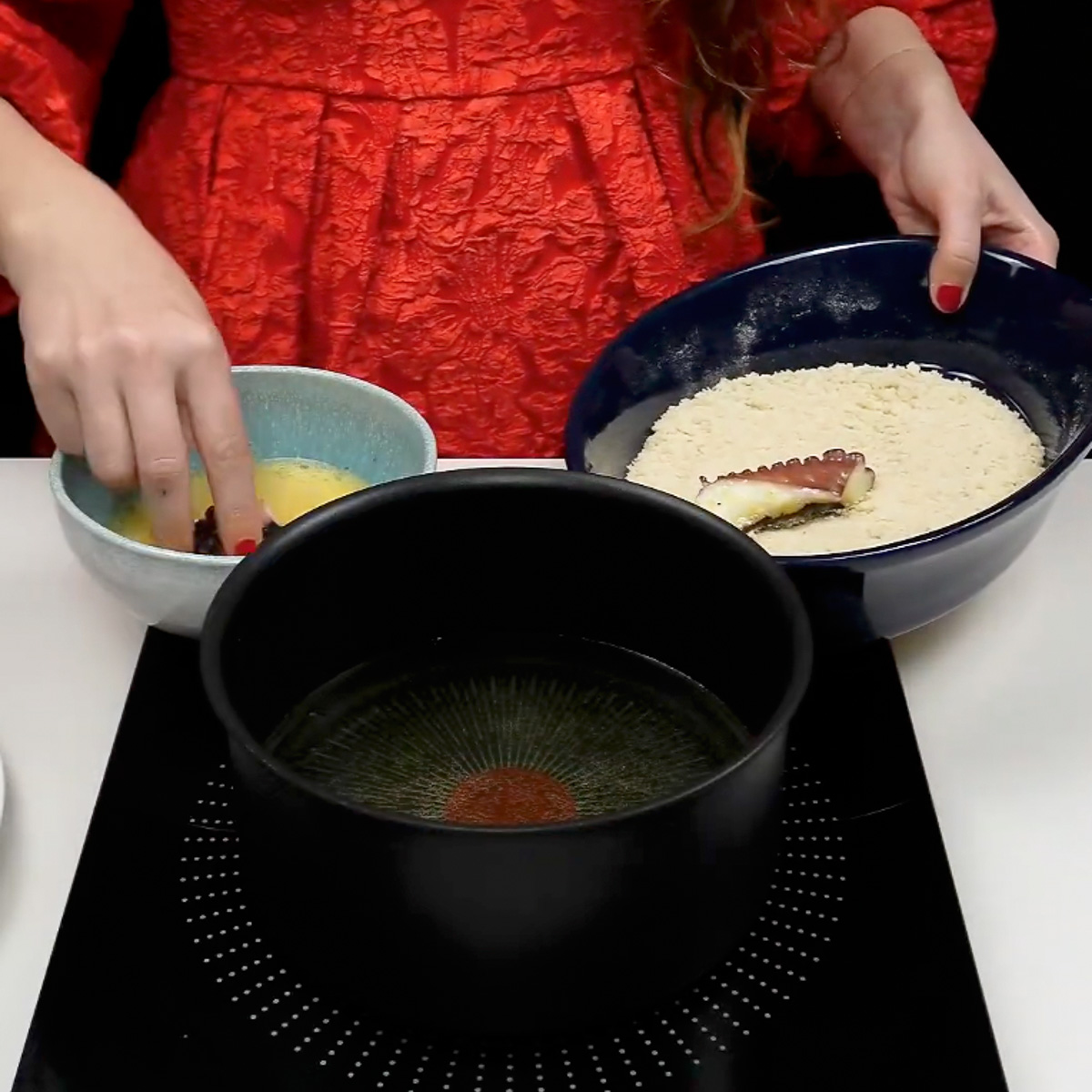
Step 4. Bread, fry and drain 15 minutesDip each tentacle into the beaten eggs, then press firmly into the breadcrumbs. Let them rest for 5 minutes. Heat oil to 350F° (180°C). Fry the tentacles for 2–3 minutes per side until golden. Place on paper towels and serve immediately with the chilled sauce. |
Step 5. Serve 1 minuteYour Portuguese Fried Octopus is ready. Serve it with zesty sauce and black-eyed pea salad, if you prefer. |
What part of the year is it best to make it?
One of the most common questions I get from you is about the seasonality of seafood. While you can technically find octopus year-round due to modern freezing techniques, the absolute best season for fresh octopus in the Atlantic is from October to February. During these colder months, the octopus tends to be larger, and the meat has a higher fat content, which makes for a much richer flavor after it’s fried.
However, there is a culinary “season” for this dish as well. Polvo Panado is traditionally a summer favorite dish. Even though the catch might be at its peak in winter, sitting outside at a sun-drenched table with a plate of crispy tentacles and a cold Portuguese White Sangria is the peak Portuguese experience.
Because our recipe calls for a pre-cooked octopus for your convenience, you can actually enjoy this dish with consistent quality in any month of the year. If you are buying it fresh to cook yourself before frying, stick to those colder months for the most tender results.
Where can I buy the ingredients to make Portuguese Fried Octopus ?
To satisfy your high standards, we need to talk about sourcing. The star of the show is the cooked octopus. You have two professional routes here. The first is visiting a high-end fishmonger.
Many quality seafood markets now offer octopus that has been vacuum-sealed and slow-cooked in its own juices (sous-vide style). This is the gold standard for this recipe because the gelatin has already broken down.
If you can’t find a specialty fishmonger, check the frozen section of a Mediterranean or Portuguese grocery store; frozen octopus is actually preferred by many chefs because the freezing process breaks down the muscle fibers, making it more tender.
For the Greek yogurt and Dijon mustard, I always recommend going organic. Since this sauce has very few ingredients, the sharp tang of a high-quality Dijon and the creaminess of a full-fat Greek yogurt will be very noticeable.
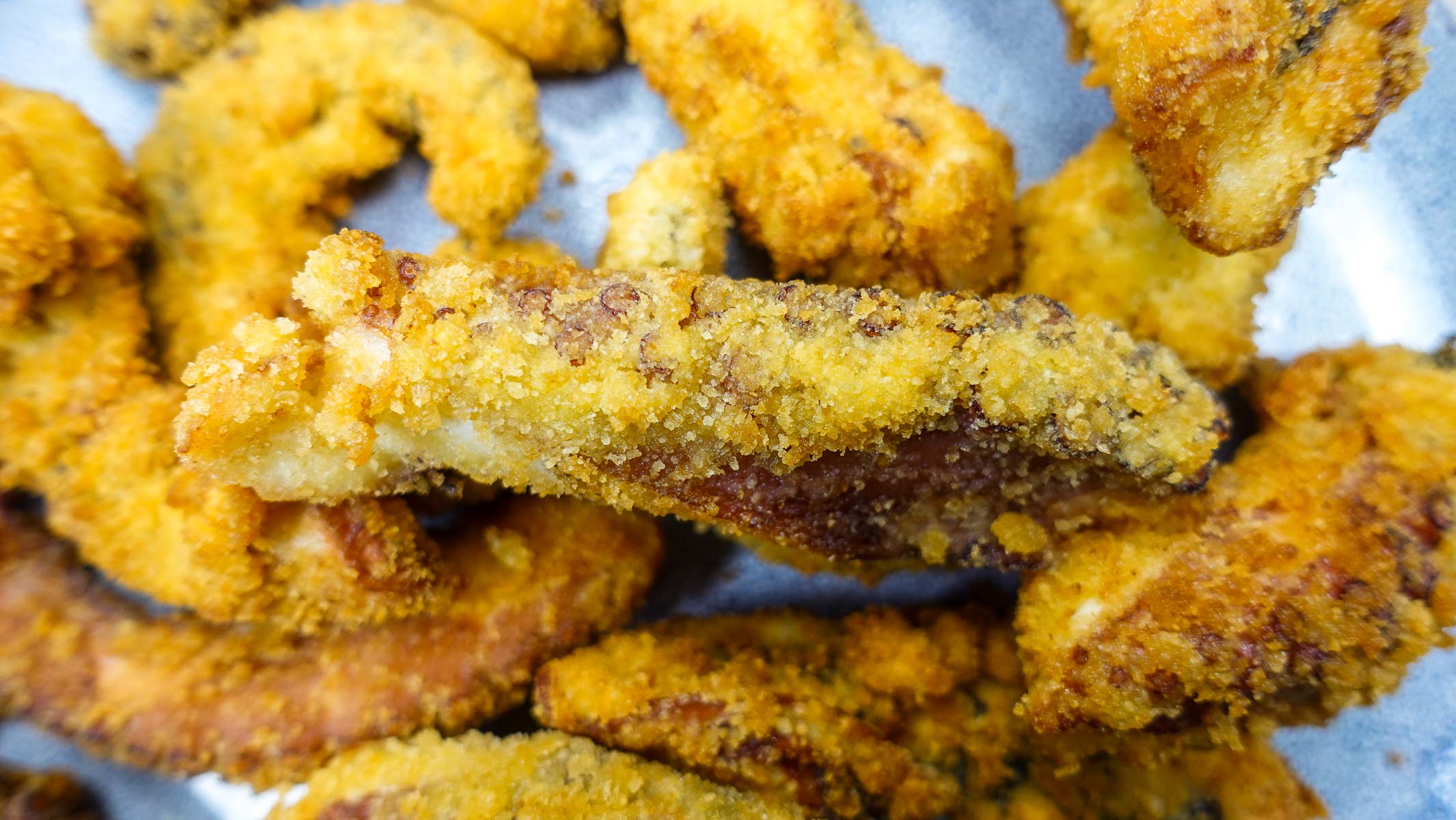
For the breadcrumbs, I love using panko for its superior crunch, but I recommend a fine-grind variety. If you can only find coarse panko, give it a quick pulse in the blender – we want a sandy texture that adheres perfectly to the purple skin of the octopus for that signature golden crust.
Can I substitute any of the recipe ingredients?
I know many of you like to experiment or might have dietary restrictions, so let’s look at the substitutions that won’t compromise the taste of the dish.
If you cannot find octopus, this exact breading and frying method works beautifully with large squid (calamari) steaks cut into strips.
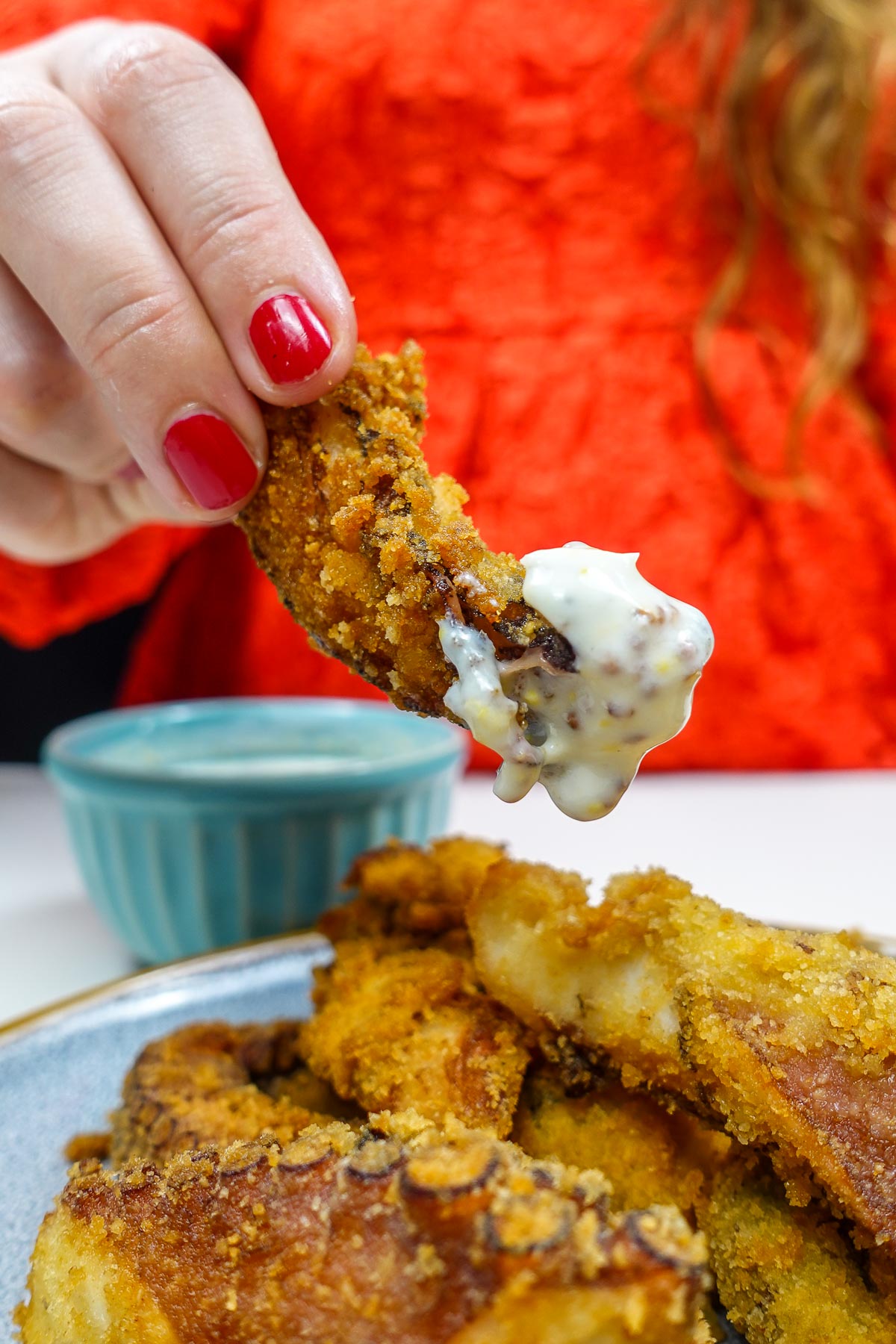
If you are looking for a gluten-free version, you can substitute the 1 cup of breadcrumbs with fine cornmeal (farinha de milho) or a gluten-free breadcrumb blend. The texture will be slightly crunchier and more “rustic,” which is actually common in the north of Portugal.
For the dipping sauce, if Greek yogurt isn’t in your fridge, you can use sour cream or even a traditional mayonnaise base, though I find the yogurt adds a necessary acidity that mayo lacks.
If you don’t have Dijon, a spicy brown mustard can work, but avoid “yellow” mustard as it is too vinegary and will overpower the delicate garlic and lemon notes we are aiming for.
Can I make Portuguese Fried Octopus part of a menu?
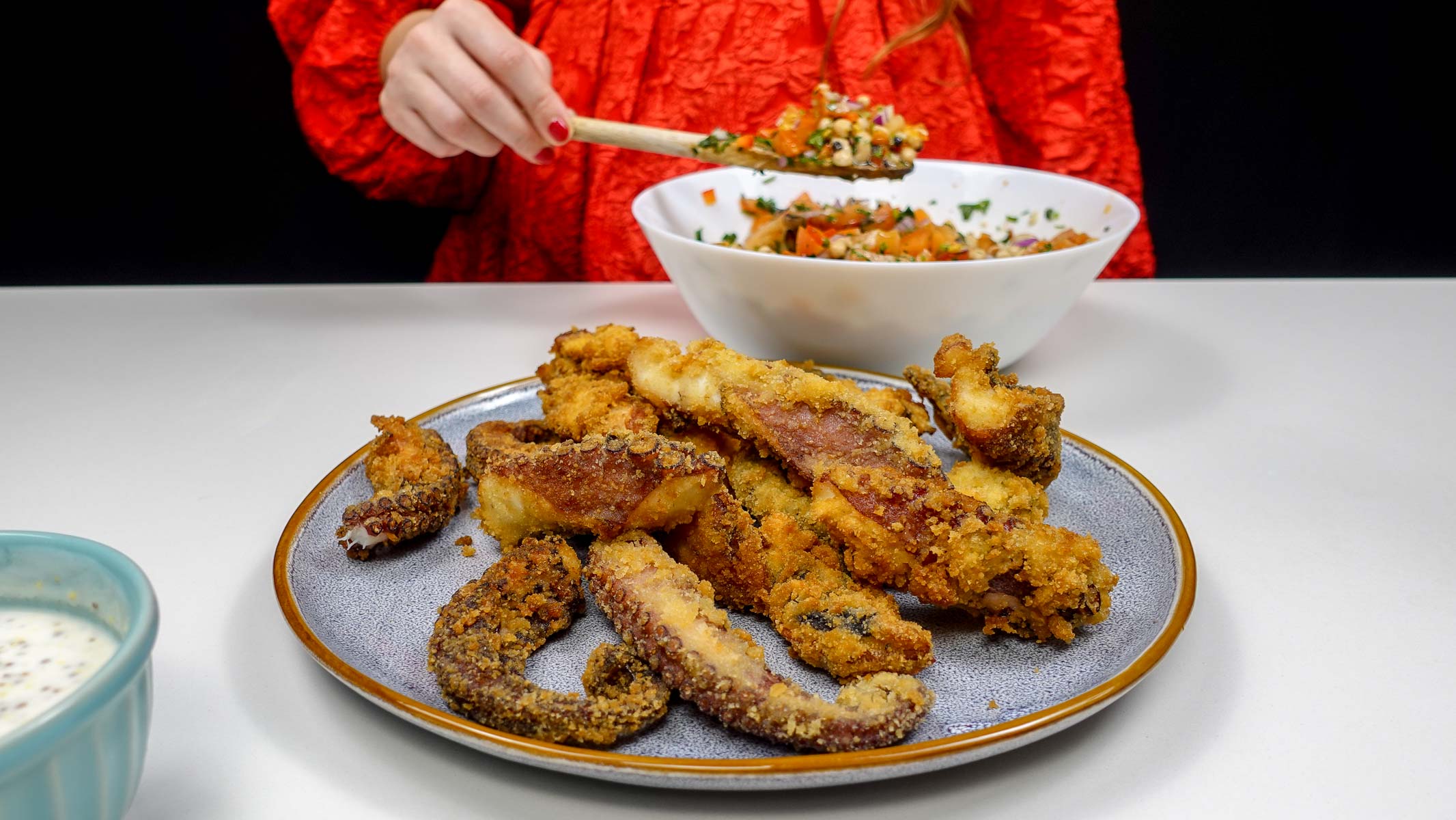
Absolutely, and this is where you can really impress your guests. In a traditional Portuguese setting, Portuguese Fried Octopus Polvo Panado is often served as a “prato principal” (main dish) alongside “Arroz de Tomate” (tomato rice) or a fresh Black-eyed Pea Salad “Salada de Frade”.
If you want to create a full tasting menu, I suggest starting with the Razor Clams in Wine Sauce I shared recently. You can also serve Razor Clams in Tomato Sauce or Portuguese Sardine Pate.
Follow that with this Fried Octopus as the star protein. To balance the plate, serve it with some Baby Baked Potatoes and a side of sautéed turnip greens (grelos) or spinach with plenty of olive oil and garlic. The bitterness of the greens acts as a perfect foil to the savory, fried coating of the octopus.
For dessert, something light, Port Wine Poached Pears or Portuguese Custard Tart, Pastel de Nata.
Recipe tips & tricks
Here are our secrets for the perfect Portuguese Fried Octopus recipe.
- Freeze the octopus first – This naturally breaks down the muscle fibers for a buttery, tender texture.
- The “Scare” method – If boiling in water, dip the tentacles three times to curl them beautifully and keep the skin intact.
- Dry thoroughly before breading – Pat the cooked tentacles bone-dry with paper towels so the panko adheres perfectly.
- Pulse the panko – Give your breadcrumbs a quick blitz in the blender for a fine, sandy texture that mimics high-end restaurant plating. We use 2 types of breadcrumbs, so we have a proper texture.
- Don’t over-fry – Since the octopus is already cooked, you only need a quick, hot fry to turn the crust golden and crispy.
- Serve immediately – Fried seafood is best enjoyed straight from the pan with a cold squeeze of lemon and tangy yogurt-Dijon sauce.
How can I make the octopus tender and not rubbery?
The absolute secret is the double-cooking method. We never fry raw octopus. By using a pre-cooked octopus, we have already allowed the collagen to break down into silky gelatin during the initial slow-boil or sous-vide process. The frying stage is strictly for developing that golden, crispy crust and heating the center.
Why is the breading falling off my octopus?
Moisture is usually the culprit. Octopus skin is naturally slippery and gelatinous. If the tentacles are even slightly damp when they hit the egg wash, the breading will slide right off. We always emphasize patting the cooked octopus dry with paper towels until it’s tacky to the touch. Also, giving the breaded pieces a five-minute “rest” before they hit the oil allows the proteins in the egg to bind the crumbs to the skin.
What is the best oil for frying this dish?
We recommend using a neutral oil with a high smoke point, such as vegetable, canola, or sunflower oil. While olive oil is iconic in Portuguese cooking, its low smoke point and strong flavor can become bitter when heated for frying. A neutral oil ensures that the star of the show remains the delicate flavor of the sea and our zesty Greek yogurt sauce.
Wine pairings and non-alcoholic options
Curated by Leo.
A dish this crispy and savory demands a drink with high acidity to scrub the palate. The ultimate pairing is a chilled Vinho Verde. This “green” wine from northern Portugal is light, slightly effervescent, and has citrus notes that mimic the lemon juice in our recipe.
If you prefer white wine but want something with more body, try an Alentejo white.
For the beer lovers out there, go for a crisp Pilsner or a light Lager. The carbonation is essential here; it cuts right through the fried coating and the creamy yogurt sauce.
If you are looking for a non-alcoholic option, a sparkling water with a heavy squeeze of fresh lime and a sprig of mint provides that same refreshing contrast.
How long can I store the leftovers?
If you happen to have any leftovers, which is rare in my house, you need to handle them carefully to maintain quality.
Fried seafood is notorious for losing its charm once it cools. You can store the fried octopus in an airtight container in the refrigerator for up to two days.
However, do not use a microwave to reheat it! The microwave will turn the octopus into rubber and make the breading soggy. Instead, use an air fryer at 375°F (190°C) for about 3-4 minutes, or a toaster oven. This will re-crisp the breadcrumbs and warm the center without overcooking the meat.
As for the yogurt sauce, it will actually taste better the next day as the garlic infuses into the yogurt. It can stay in the fridge for up to 3 days. If the sauce separates slightly, just give it a quick whisk before serving.
To Sum Up...
There is nothing quite like the crunch of a perfectly fried octopus tentacle followed by the tender, melt-in-your-mouth interior.
In Portugal, Polvo Panado is the gold standard of “petiscos.” We are taking this classic dish and pairing it with a modern, zesty sauce that balances the richness of the fry.
2 comments Hide comments
My type of an appetizer. Always looking for it when visiting Portugal. Glad I can now try it at home. Will let you know how it goes!!
Sounds like a plan. Can’t wait to hear back from you, Maniya!