
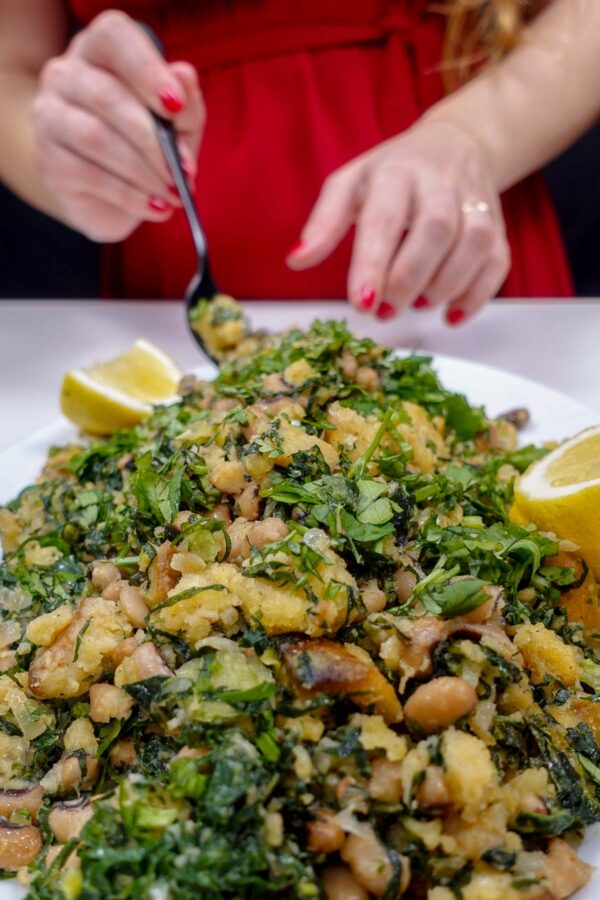
Black-eyed Peas Bread Mash – Migas de Feijao Frade
Hearty and rustic portuguese bread mash
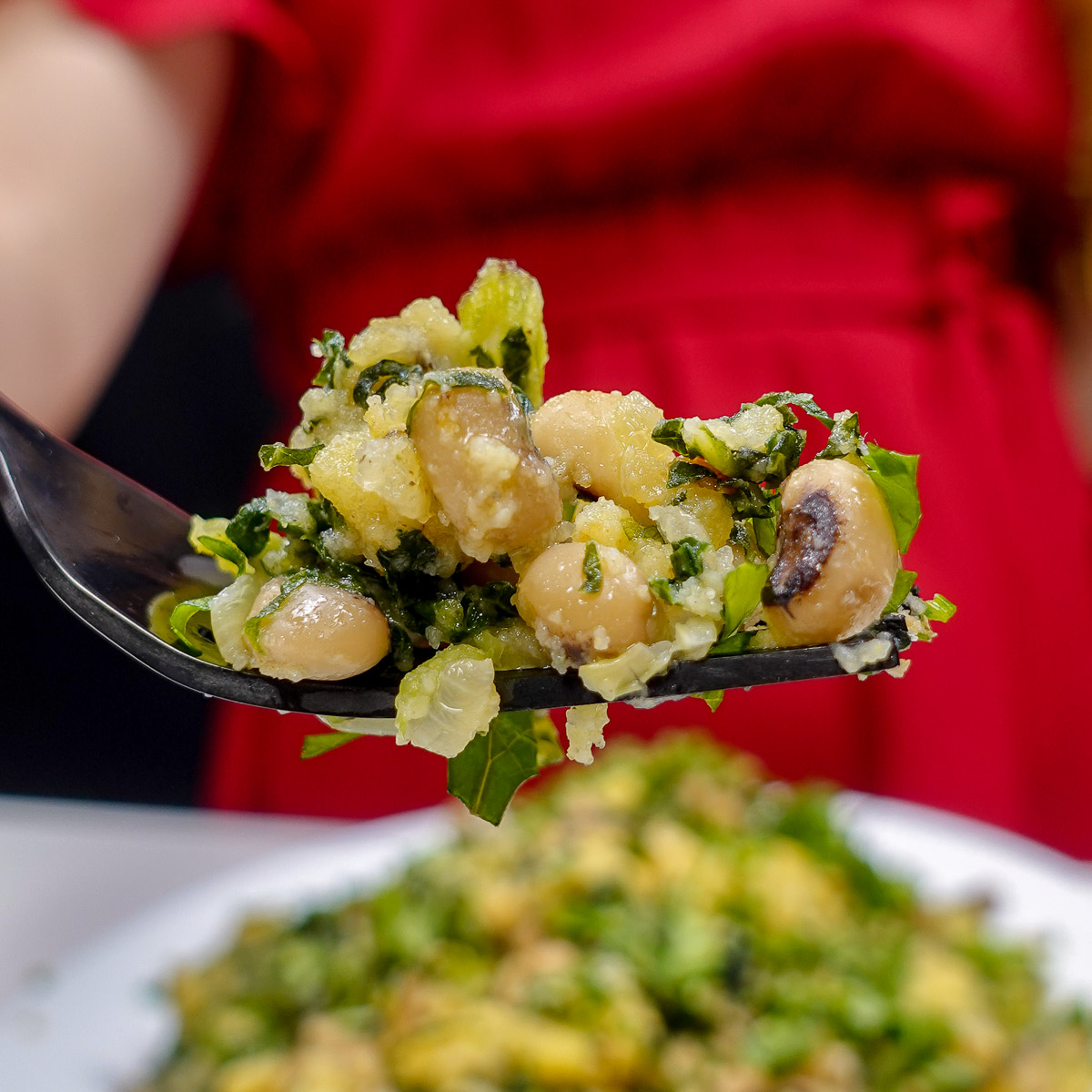
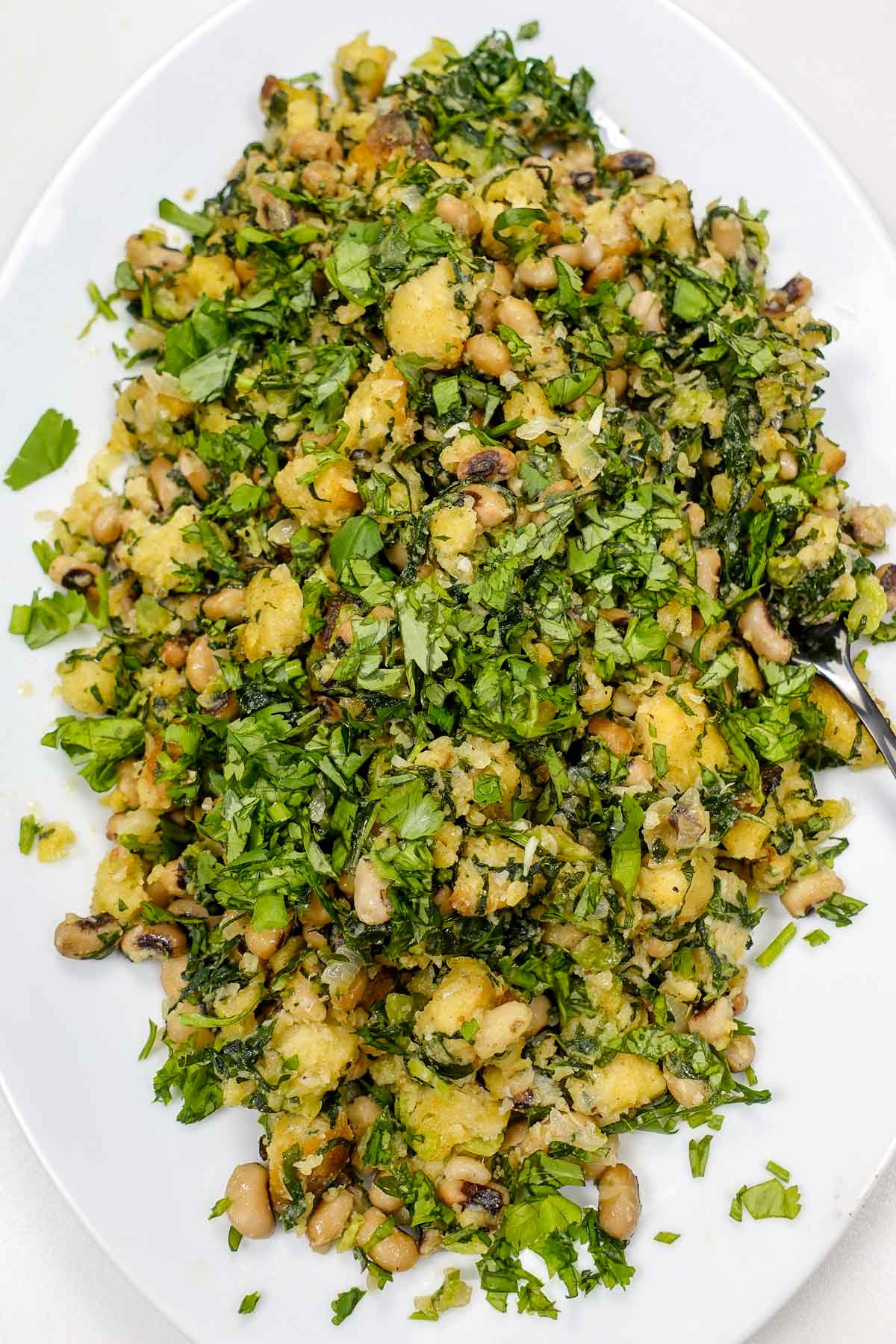
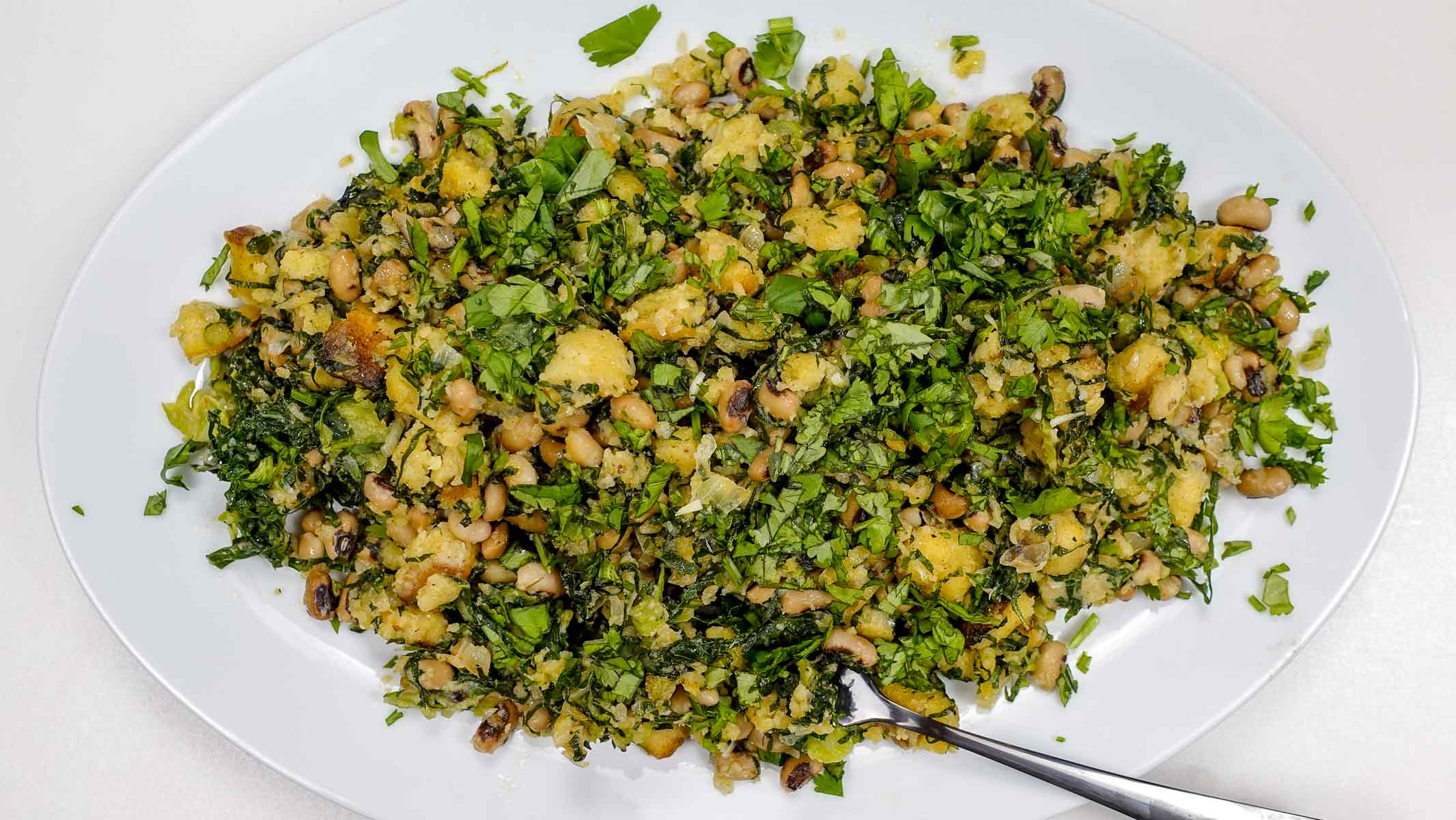
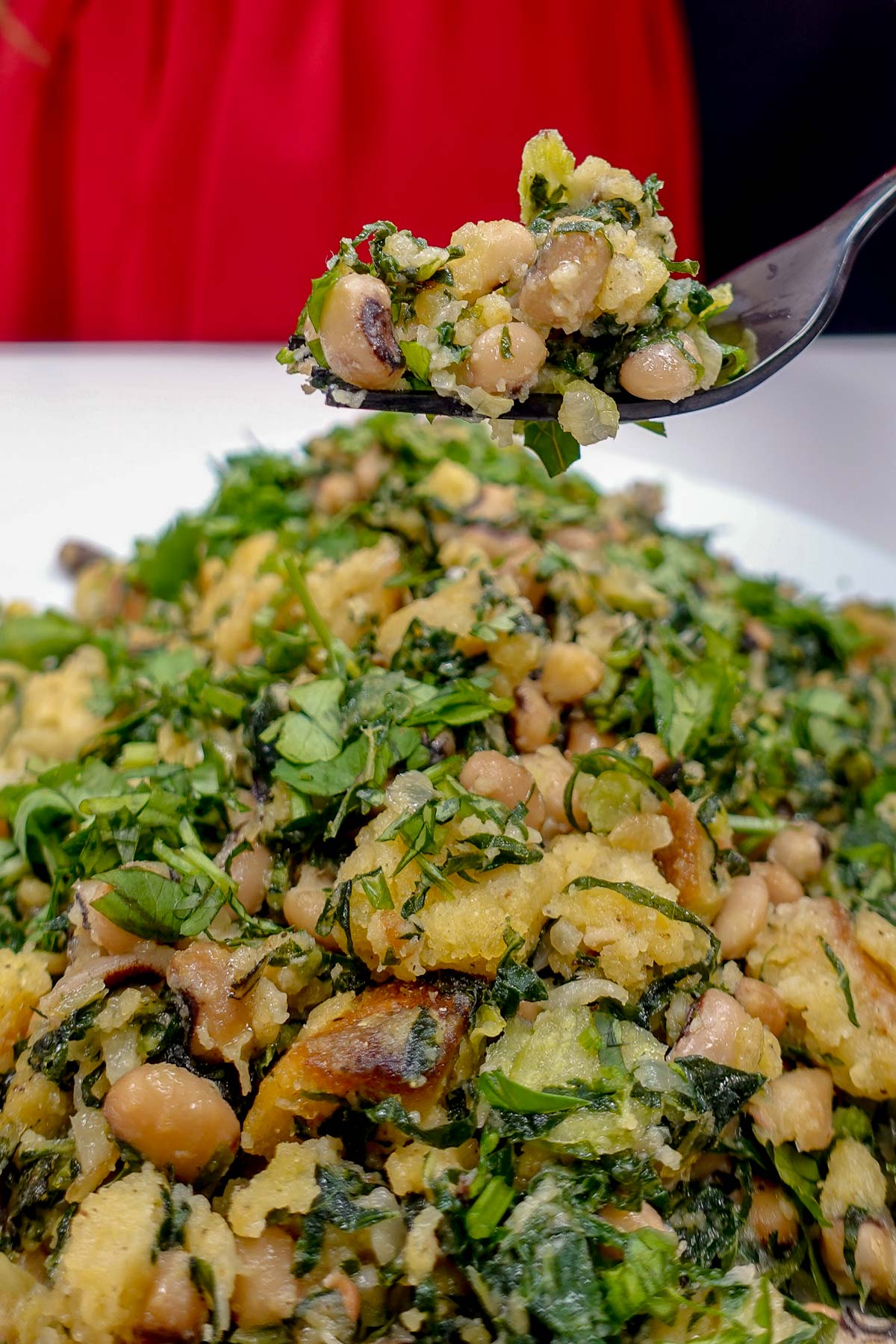
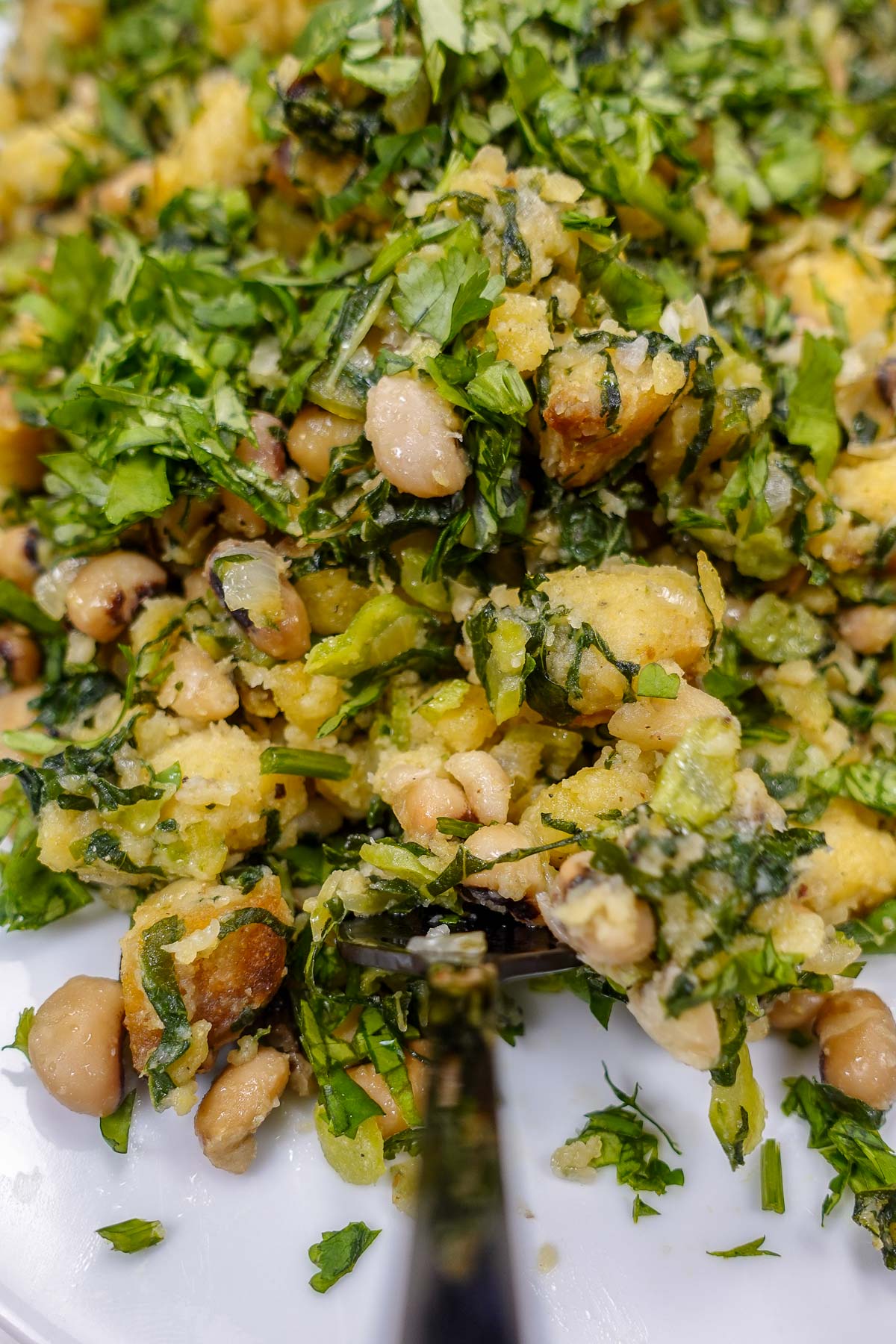
This Portuguese Black-Eyed Peas Bread Mash is hearty, flavorful, and made with tender peas, kale, cornbread, garlic, and fresh cilantro.
Quick Info:
Latest Review
I’ve only seen these in the movie.. I don’t remember the name but it was shot in Lisbon. Loved the move, love the look of the dish. This is how I ended up here. Just saying 🙂

Ingredients
- 1 cupcooked black-eyed peas
- 8 ounceschopped kale
- 8 ounces cornbread
- 4 cloves garlic
- 1brown onion
- 5 tablespoons olive oil
- 3 tablespoonschopped cilantro
- to taste salt
- to taste fresh cracked pepper
Portuguese Black-eyed Peas Bread Mash, known as Migas de Feijão Frade in Portuguese, is a rustic and comforting dish made with cooked black-eyed peas, tender kale, cornbread, garlic, onion, olive oil, and fresh cilantro. I love this recipe because it takes simple ingredients and turns them into a hearty Portuguese-style dish with plenty of flavor and texture.
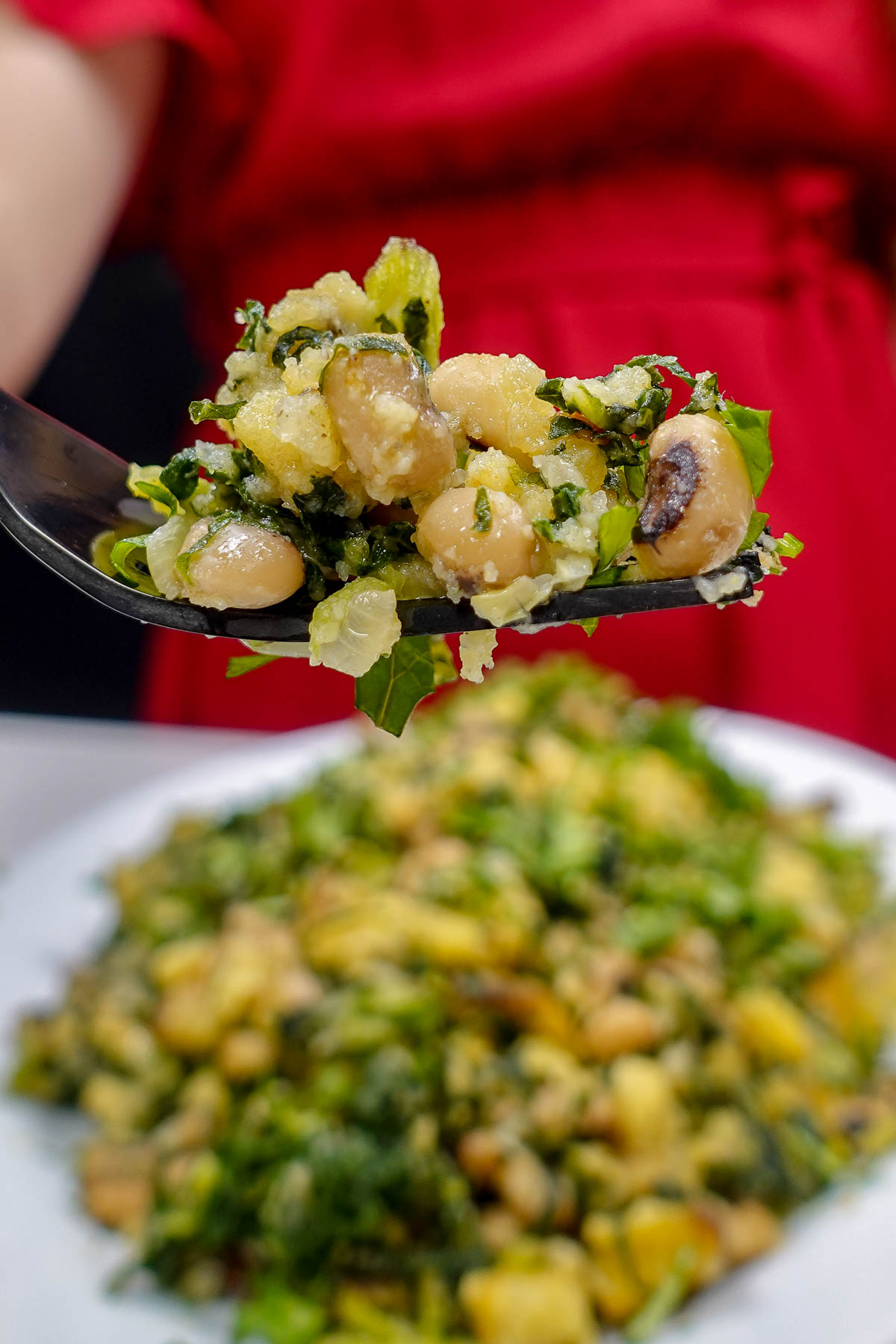
This is my kind of home cooking. Black-eyed peas add creaminess, kale – freshness, and the cornbread absorbs the garlic-infused olive oil while becoming golden in the pan.
I also finish the migas with fresh cilantro – for a bright, herbaceous flavor.
In Portuguese, feijão-frade refers to black-eyed peas, while migas describes a family of rustic dishes based around bread or breadcrumbs combined with other ingredients. And as with any other dish, there are many regional and family variations of migas in Portugal.
For this particular recipe, I use cornbread rather than regular wheat bread. It gives the migas a wonderful rustic texture and a subtle corn flavor that works especially well with the black-eyed peas and kale. If you have leftover cornbread, this is also a delicious way to turn it into a completely different meal.

Ingredients
| 1 cup cookedblack-eyed peas |
| 8 ounces choppedkale |
| 8 ounces cornbread |
| 4 cloves garlic |
| 1 brownonion |
| 5 tablespoons olive oil |
| 3 tablespoons choppedcilantro |
| to taste salt |
| to taste fresh cracked pepper |
Nutrition per 1 serving
Please note that I am not a nutritionist. The nutrition information is provided for reference only.
How to make Black-eyed Peas Bread Mash – Migas de Feijao Frade
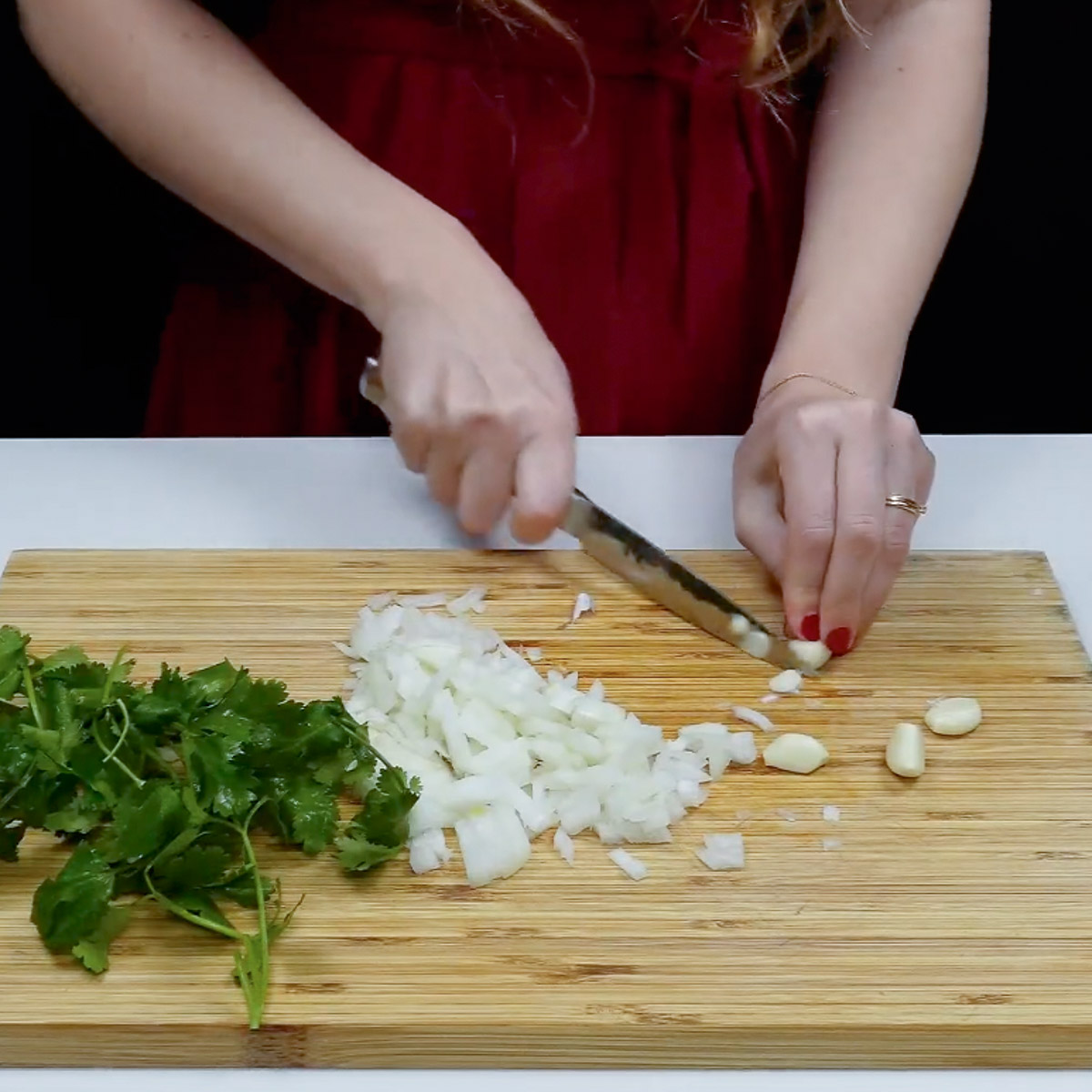
Step 1. Prepare vegetables 5 minutesPeel the onion and garlic cloves and chop them finely. Chop cilantro. |
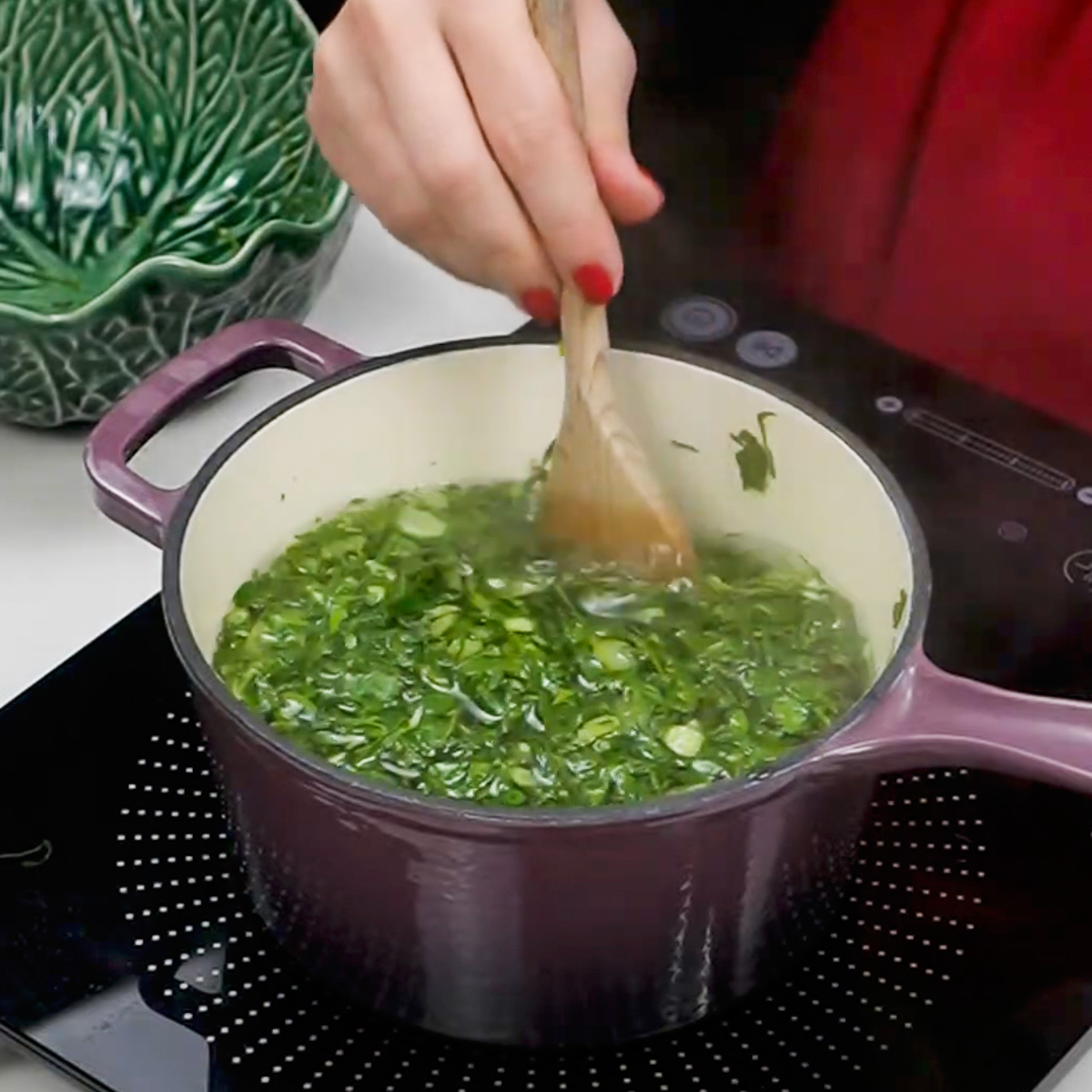
Step 2. Cook kale 10 minutesBring a pot of salted water to a boil. Add the kale and cook for 10 minutes. Then transfer the kale to cold water and drain. Leave it aside. |
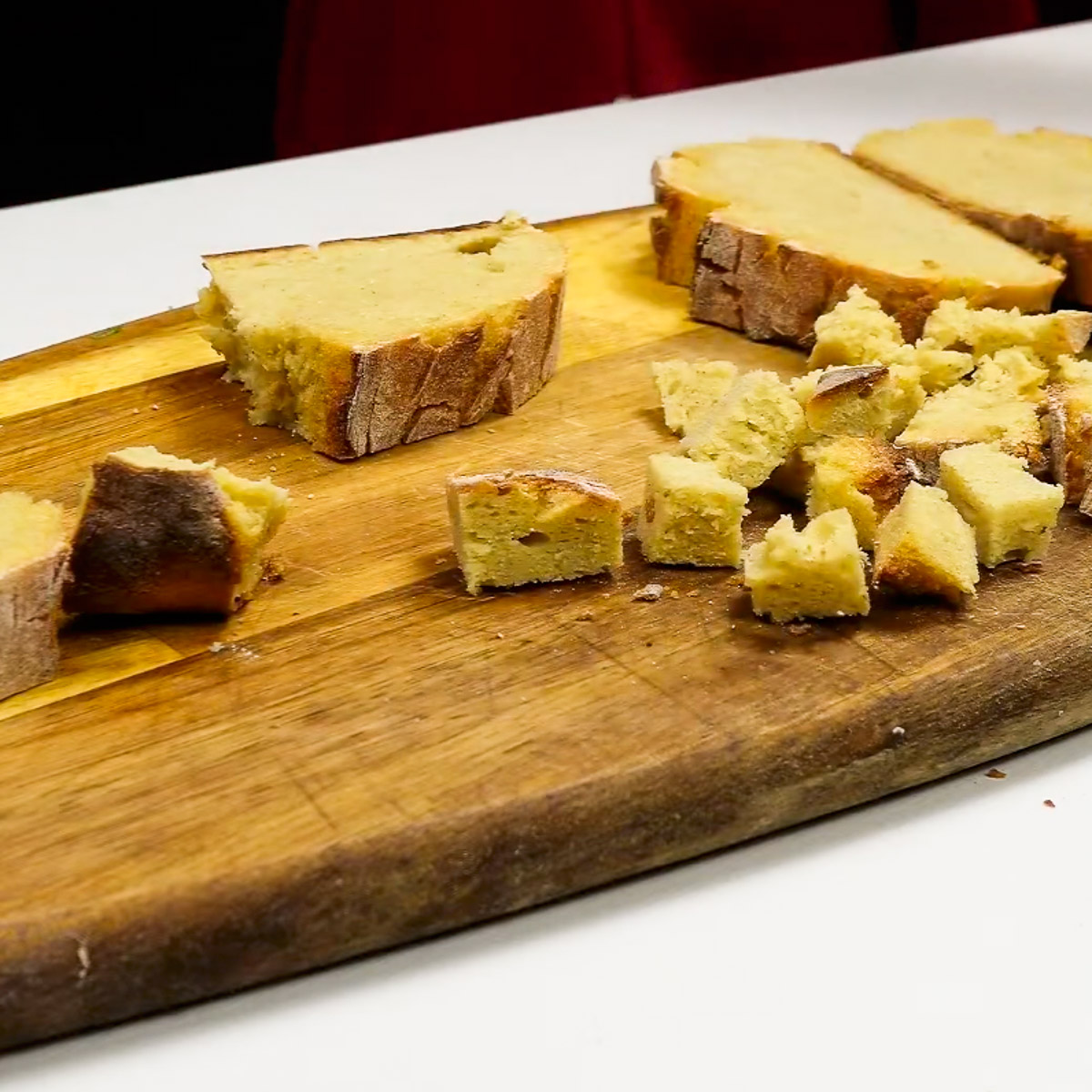
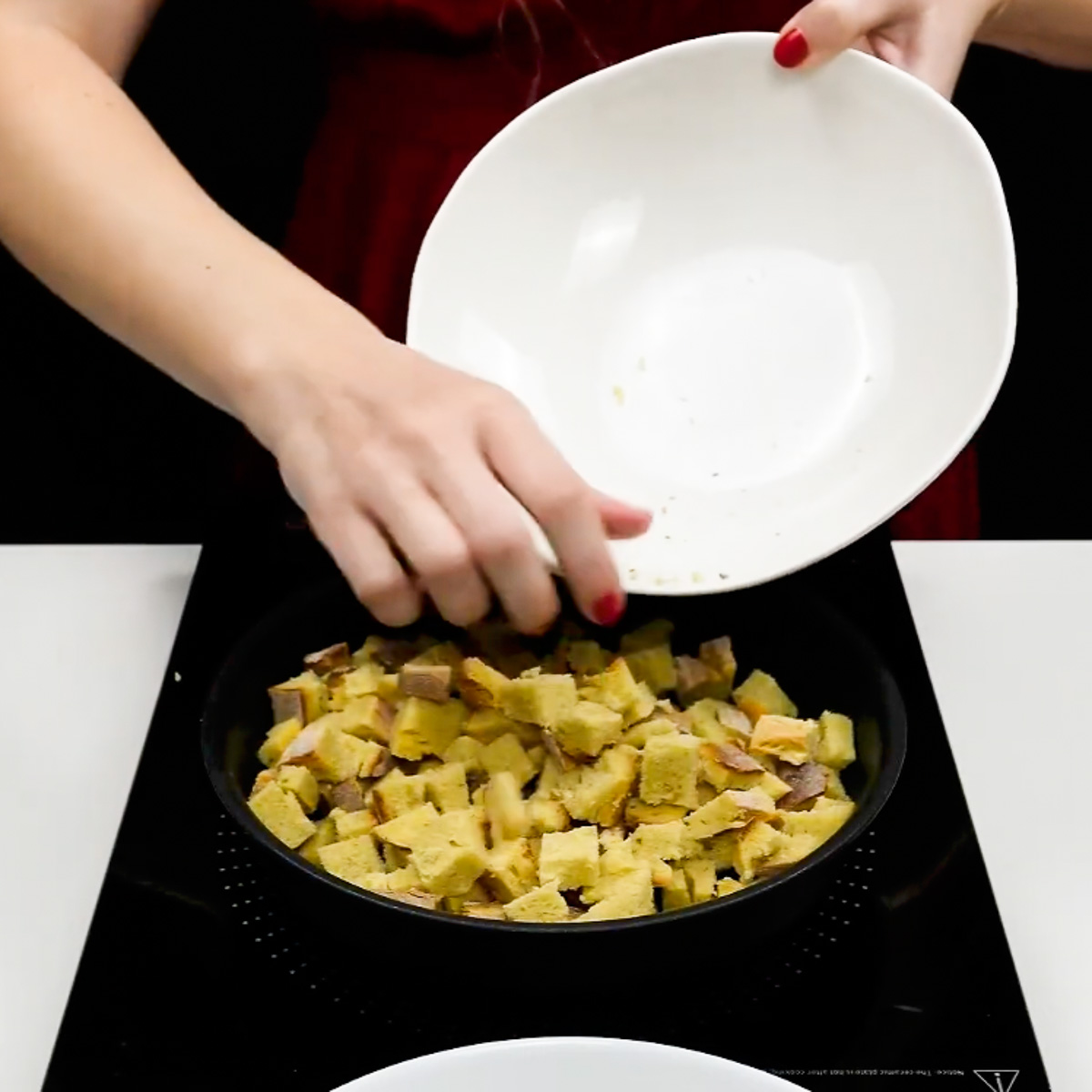
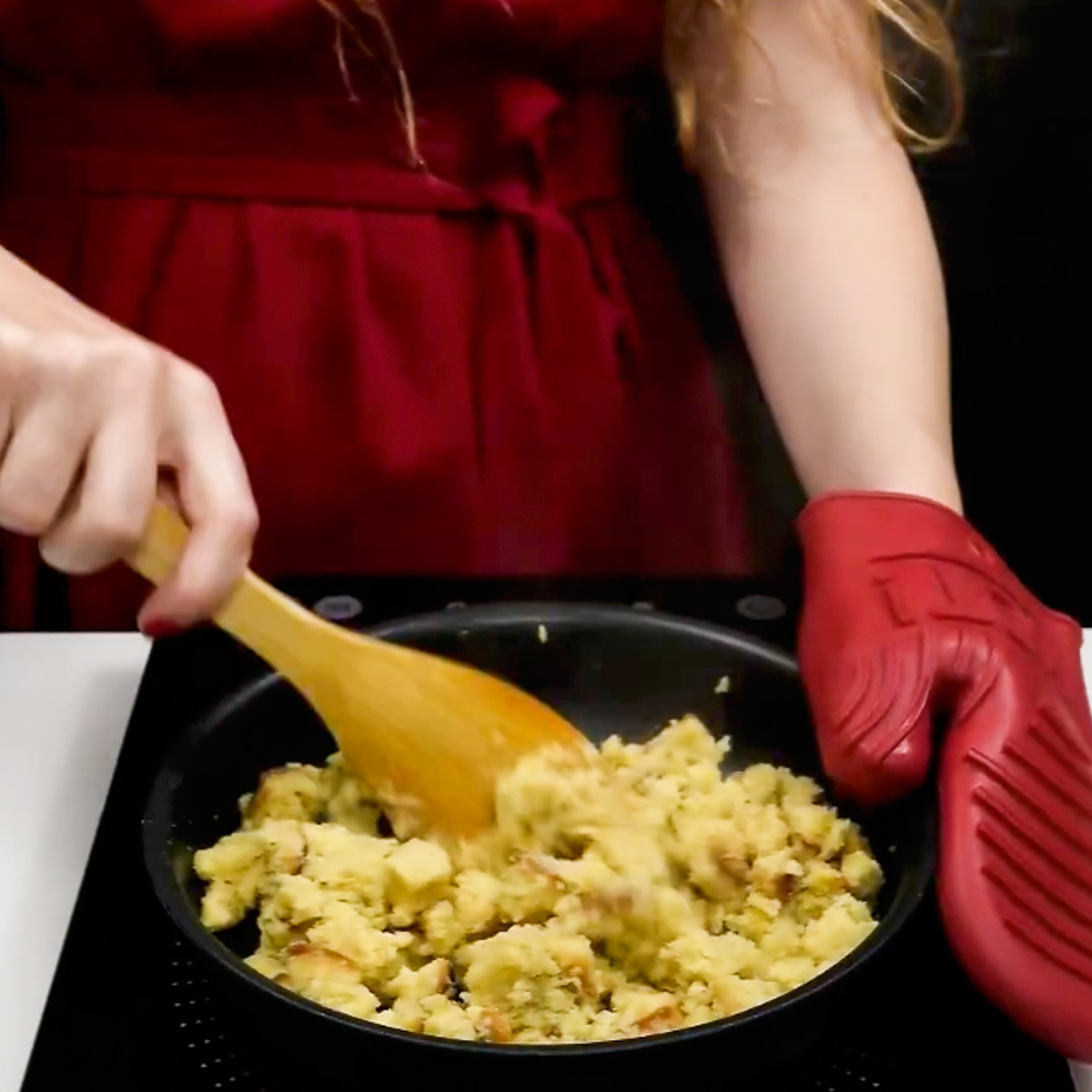
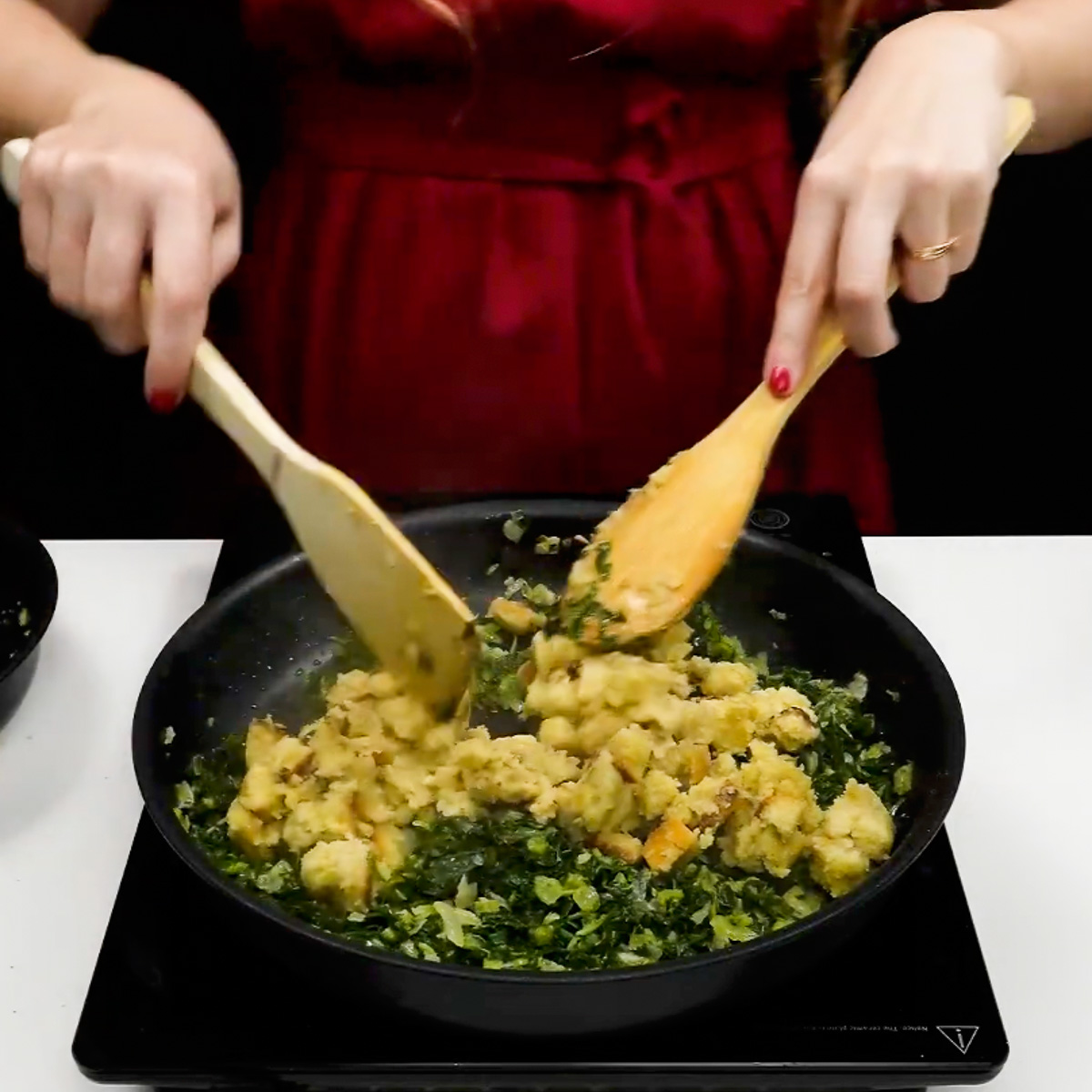
Step 3. Chop and toast the cornbread 10 minutesMeanwhile, cut the cornbread into pieces and crumble it coarsely. Heat the pan. Add the cornbread into a hot pan, add 1/2 cup of boiling water, and let it absorb the water. Continue mixing it with a spoon until you get crumbs. |
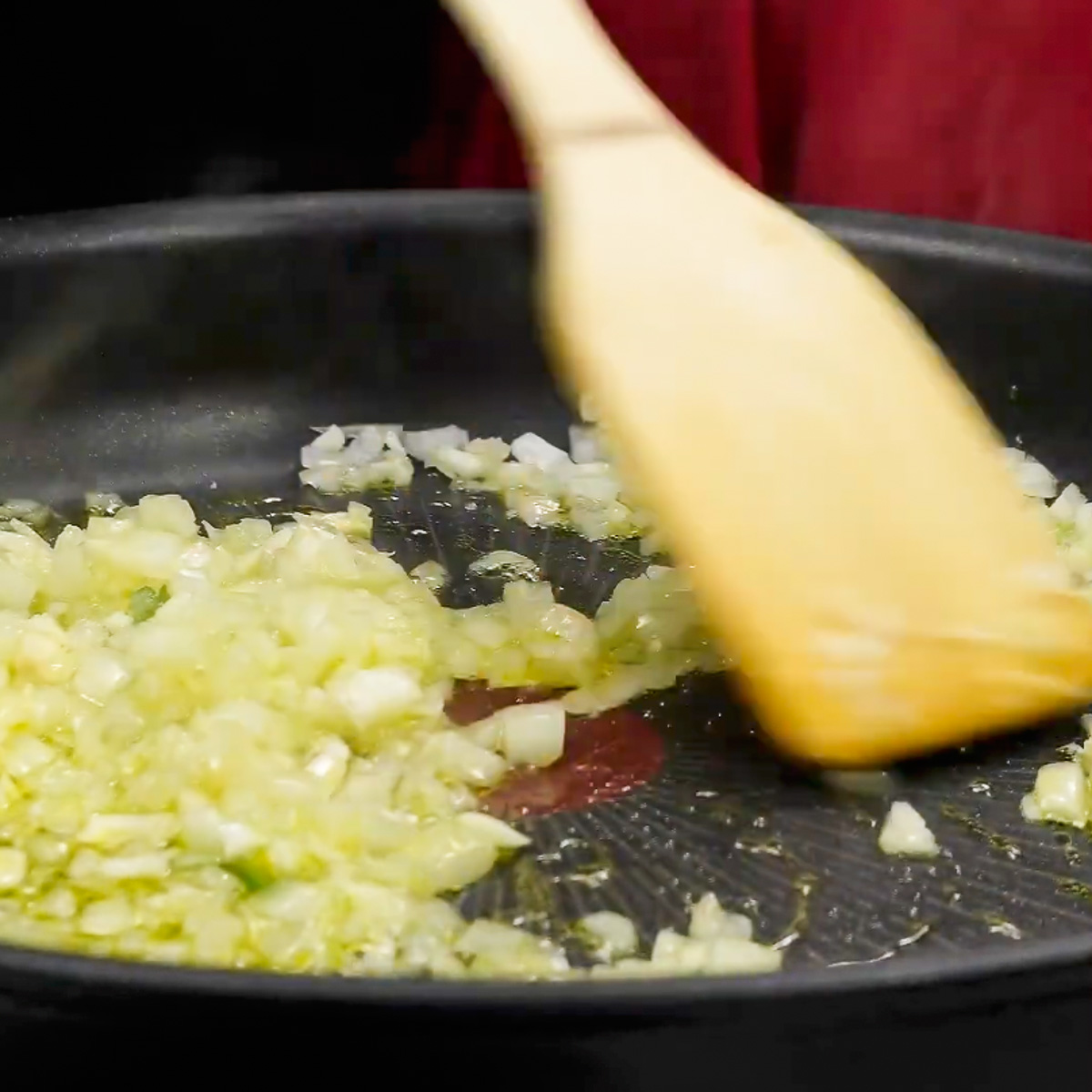
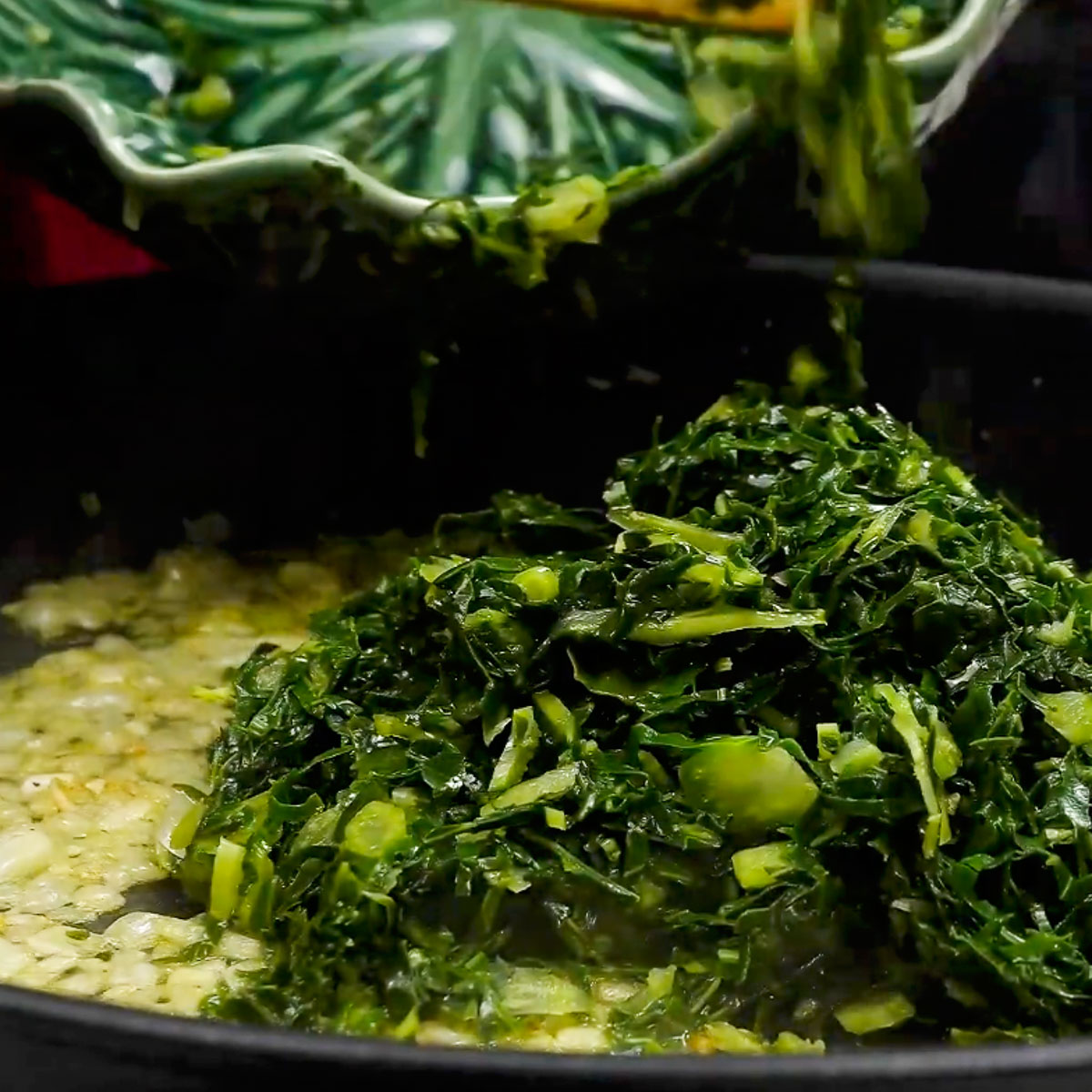
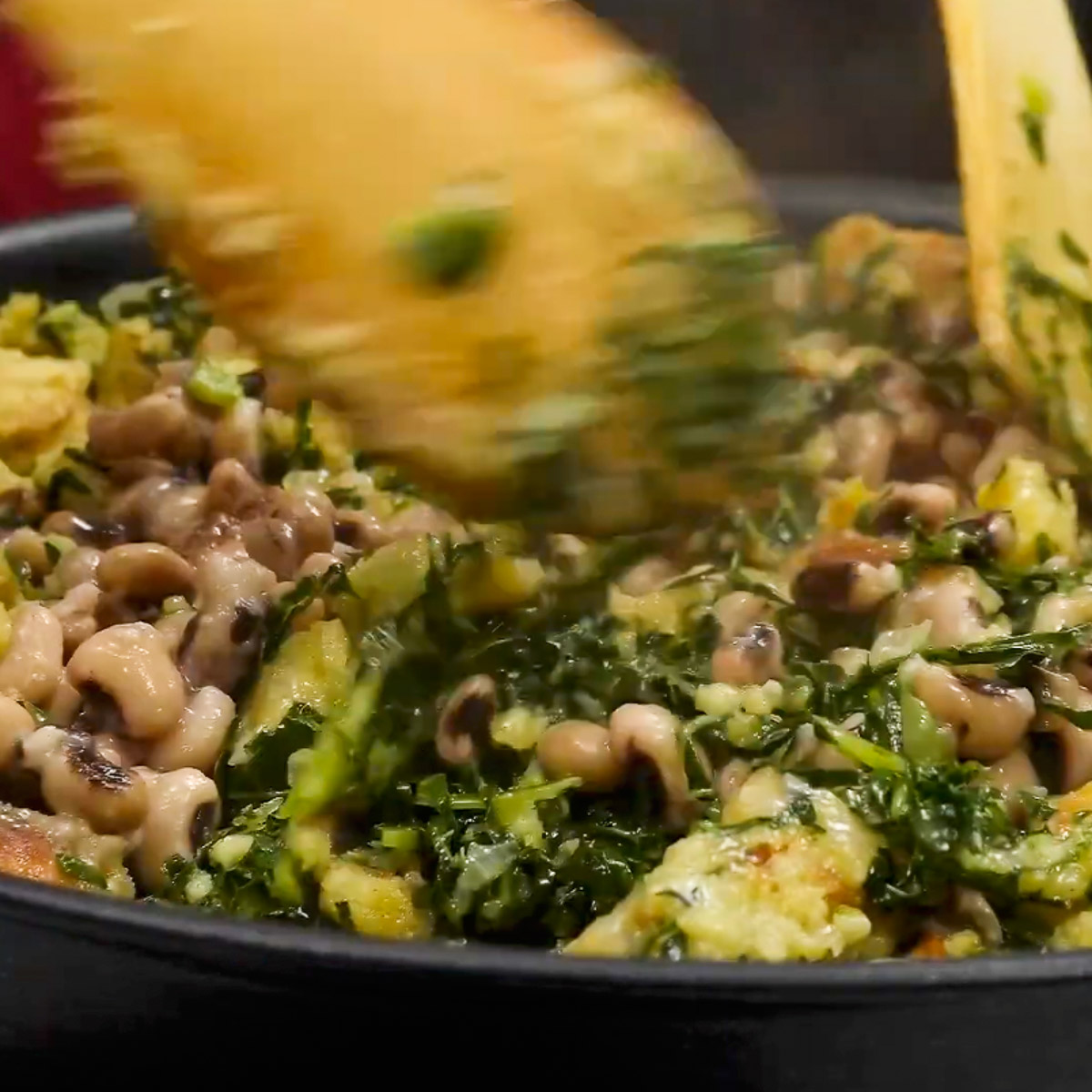
Step 4. Cook vegetables, cornbread and peas 15 minutesHeat the olive oil in a large skillet over low heat. Add the onion and garlic and cook until softened. Add the kale and sauté well. Then add the cornbread and season with salt and pepper. Finally, add the rinsed and drained black-eyed peas, stir everything together, and heat thoroughly. Adjust the seasoning if necessary. |
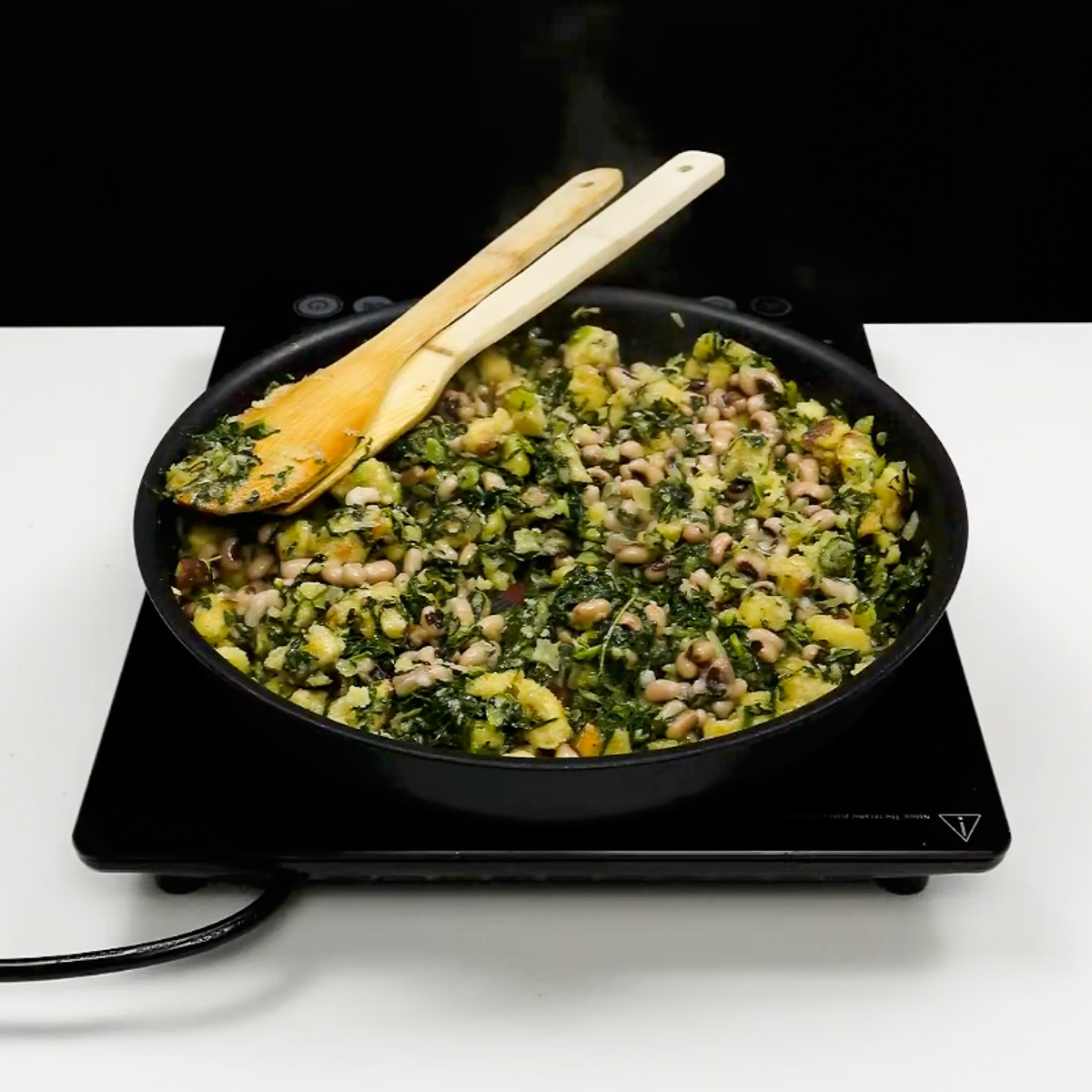
Step 5. Serve 2 minutesRemove from the heat and transfer to a serving dish. Sprinkle with chopped cilantro and serve. Your Black-eyed peas bread mash – Migas de Feijao Frade is ready! |
What part of the year is it best to make it?
I particularly enjoy black-eyed peas bread mash during fall and winter. Kale is at its best during the cooler months, and hearty dishes like this are exactly what I want when the weather turns cold.
However, I make Migas de Feijão Frade all year round.
If you grow kale or have a garden, this is a wonderful seasonal recipe for using fresh greens. The kale doesn’t need to be cooked until completely soft; I prefer it tender but still slightly firm so it keeps some texture in the finished migas.
Where can I buy the ingredients to make Black-eyed Peas Bread Mash – Migas de Feijao Frade ?
You can find the ingredients for this black-eyed peas bread mash at most supermarkets. Black-eyed peas are usually available canned or dried. I use cooked black-eyed peas for convenience, but dried beans can also be cooked ahead of time and used in the recipe.
Kale is normally available in the fresh produce section. Look for firm, dark green leaves without yellowing or wilted edges. I remove particularly tough stems before chopping the kale.
For the cornbread, I recommend using a rustic, slightly firm loaf. In Portugal, broa or Portuguese cornbread is an excellent choice. Its crumb is substantial enough to absorb the olive oil without immediately falling apart.
Fresh garlic, brown onion, cilantro, salt, and black pepper are everyday ingredients that you can find almost anywhere.
I also recommend using a good extra virgin olive oil. Olive oil is one of the main flavors in this recipe, so I don’t treat it as just a cooking ingredient. A fruity Portuguese olive oil makes these migas particularly delicious.
Can I substitute any of the recipe ingredients?
Yes. One of the things I love about migas is that they are flexible and work well with simple substitutions.
If you cannot find black-eyed peas, you can use another cooked beans. White beans are probably the closest substitute in terms of texture, although the flavor will be different. For the most authentic connection to Migas de Feijão Frade, however, I recommend using black-eyed peas whenever possible.
You can replace fresh kale with collard greens, Portuguese couve, or Swiss chard. I prefer sturdy greens because they hold their texture well when combined with the cornbread and beans.
If you don’t have access to broa, you can use good-quality cornbread from a bakery or supermarket. I prefer cornbread that is not extremely soft or sweet because we want the savory flavors of the garlic, onion, kale, and black-eyed peas to remain the focus. But if you only have regular crusty bread, you can use it, yet the flavor and texture will be slightly different.
And I sometimes use parsley instead of cilantro if someone at the table doesn’t enjoy cilantro. Cilantro gives these migas a distinctive fresh finish, but parsley is a great substitute.
Can I make Black-eyed Peas Bread Mash – Migas de Feijao Frade part of a menu?
Absolutely. I usually think of black-eyed peas bread mash as a side dish, but it can easily become the main part of a simple vegetarian meal.
One of my favorite ways to serve Migas de Feijão Frade is with Oven Baked Turbot or Whole Baked Rainbow Trout. The earthy black-eyed peas, garlicky cornbread, and tender kale are excellent with Portuguese-style fish dishes. You can serve it with Foil Baked Sea Bream, Crispy Fried Cod with Onions and Potatoes, Madeiran-style Tuna Steaks, grilled sardines, or another simple white fish. Because the migas are already flavorful, I prefer keeping the fish preparation relatively simple.
For a meat option, I like serving the migas with Portuguese Sausage with Cabbage. The beans and kale make the meal more substantial while the cornbread provides a wonderful rustic texture.
For a vegetarian dinner, I serve the migas with a fresh Garlic Tomato Salad, Cabbage Cucumber Salad, or simple Portuguese Mixed Salad Salada Mista. Something fresh and acidic balances the richness of the olive oil and cornbread.
For a dessert, I like to serve Portuguese Custard Cream – Leite Creme or Port Wine Poached Pears.
Recipe tips & tricks
Here are my pro tips on how to make this recipe perfect:
- Use well-drained black-eyed peas. Whether you use canned or previously cooked black-eyed peas, drain them thoroughly. Extra liquid can make the migas wet instead of rustic and crumbly.
- Choose firm cornbread. Very soft cornbread can break down quickly when combined with the beans and kale. A firm rustic cornbread or Portuguese broa gives us much better texture.
- Cut the cornbread into small pieces. I don’t turn it into fine crumbs. Small pieces give the finished dish more texture and allow some parts to become golden and crisp.
- Don’t burn the garlic. Garlic only needs a short time in the hot olive oil. I cook it until fragrant and then move on to the next ingredient.
- Don’t overcook the kale. Kale should be tender but still have some bite. If you cook it until completely soft, the finished migas can lose some of their texture.
- Use enough olive oil. The 5 to 6 tablespoons listed in the recipe are important. The oil coats the cornbread and helps create the rich texture that makes good migas so satisfying.
- Season as you go. I add salt gradually because the cornbread and cooked beans may already contain some salt. Freshly cracked black pepper gives the dish a little extra warmth.
- Use a wide skillet. A wide pan gives the ingredients enough room to cook evenly. It also makes it easier for the cornbread to come into contact with the hot surface and develop golden edges.
- Add cilantro at the end. Fresh cilantro has a much brighter flavor when it is added toward the end rather than cooked for a long time.
- Taste before serving. The final seasoning is important. I always taste the migas after everything has been combined and adjust the salt and black pepper before serving.
What are Migas de Feijão Frade?
Migas de Feijão Frade is a Portuguese-style migas made with feijão-frade, the Portuguese name for black-eyed peas. This version combines black-eyed peas with kale, cornbread, garlic, onion, olive oil, and cilantro.
What is feijão-frade in English?
Feijão-frade is commonly known in English as black-eyed peas or black-eyed beans. They are small cream-colored legumes with a distinctive dark spot.
What is the difference between migas and bread mash?
Migas is a Portuguese term used for rustic dishes traditionally made with bread or breadcrumbs and other ingredients. In this recipe, I use the term bread mash because the cornbread is combined with beans, greens, aromatics, and olive oil to create a hearty, rustic dish.
Can I use canned black-eyed peas?
Yes. Canned black-eyed peas are one of the easiest options for this recipe. I rinse and drain them thoroughly before adding them to the skillet.
Can I use dried black-eyed peas?
Yes. Cook the dried black-eyed peas until tender, drain them well, and allow them to cool slightly before using them in the recipe.
What bread is best for Portuguese migas?
I prefer firm cornbread or Portuguese broa. It has enough structure to absorb the olive oil and flavors while still maintaining some texture.
Can I make migas without kale?
Yes. You can leave out the kale or replace it with another sturdy leafy green such as collard greens, Portuguese couve, or Swiss chard.
How do I make crispy migas?
Use a wide skillet, enough olive oil, and firm cornbread. Once everything is combined, allow the cornbread to sit against the hot pan for a little while before stirring. This helps create golden, crispy edges.
Is black-eyed peas bread mash vegetarian?
Yes. This recipe is vegetarian and contains black-eyed peas, kale, cornbread, olive oil, onion, garlic, cilantro, salt, and pepper. It can be served as a vegetarian main course or side dish.
Wine pairings and non-alcoholic options
Curated by Leo.
Black-eyed peas bread mash pairs especially well with fresh Portuguese wines. The dish has earthy beans, hearty cornbread, garlic, greens, and olive oil, so I like choosing a drink with enough freshness to balance those flavors.
For fish, my first choice is crisp Portuguese white wine or Vinho Verde. The acidity and freshness work beautifully with the olive oil and beans without making the meal feel heavy.
If I serve Migas de Feijão Frade with grilled chicken, pork, or sausages, I choose young Portuguese red. A lighter red from Portugal can complement the earthy flavors without overpowering the dish.
For a non-alcoholic option, sparkling water with lemon is excellent. The acidity and bubbles provide a refreshing contrast to the richness of the olive oil and cornbread. A simple homemade lemonade or unsweetened iced tea will work great, too.
How long can I store the leftovers?
I store leftover black-eyed peas bread mash in an airtight container in the refrigerator for up to 3 days. I let the migas cool before transferring them to the refrigerator, but I don’t leave cooked food sitting at room temperature for an extended period.
For the best texture, I reheat the leftovers in a skillet. I add a small drizzle of olive oil and warm the migas over medium heat, turning them occasionally so they heat evenly. If you use a microwave, the migas will still be perfectly edible, but the cornbread will generally become softer.
I don’t recommend freezing the finished migas. The black-eyed peas themselves freeze well, but the combination of kale and cornbread can lose its original texture after freezing and thawing.
To Sum Up...
If you are looking for a Portuguese black-eyed peas bread mash recipe that is easy enough for a weeknight but interesting enough to serve as part of a larger Portuguese meal, this is one we highly recommend.
And if you have leftover cornbread in your kitchen, even better. You can turn it into a completely new dish with a handful of simple ingredients and a good splash of olive oil.
These Migas de Feijão Frade are a rustic, economical, comforting, and flexible homemade Portuguese meal that you absolutely have to try.
Have you made this recipe?
No related recipes found.
3 comments Hide comments
I’ve only seen these in the movie.. I don’t remember the name but it was shot in Lisbon. Loved the move, love the look of the dish. This is how I ended up here. Just saying 🙂
I’ve only seen these in the movie.. I don’t remember the name but it was shot in Lisbon. Loved the move, love the look of the dish. This is how I ended up here. Just saying 🙂
Than you, Mark. I never saw the move you are talking about, so if you remember the name, please let me know. Hop you will give my recipe a go!